How to Trade Stocks on Saturday and Sunday

Published
April 17, 2026
Author
Hyperdash
Reading time
4 min read
Category
Perps vs CFDs
Central banks hold emergency meetings. Geopolitical conflicts escalate. Macroeconomic data leaks.
By the time the Chicago Mercantile Exchange (CME) or the New York Stock Exchange (NYSE) finally opens its doors on Monday morning, the price has already "gapped" to a new reality, often blowing right past your carefully placed stop-loss orders.
This is the reality of traditional finance. It's an archaic system built for an era before the internet, where market hours were dictated by when brokers physically walked onto a trading floor.
But there is a structural shift happening right now. You no longer have to wait for Monday. Through decentralized platforms like Hyperliquid, and professional terminals like Hyperdash terminal, the concept of "market hours" is being eradicated. You can now trade perpetual futures for crypto, oil, gold, and even the S&P 500 directly on-chain, 24/7/365.
Here is exactly how the weekend gap is weaponized against retail traders, how institutional hedge funds are adapting, and how you can access these continuous markets today.
The Unquantifiable Threat of the Weekend Gap
To understand why 24/7 trading is a necessity, you have to understand the math behind gap risk.
Gap risk occurs when an asset's price moves dramatically between the Friday close and the Monday open. Because traditional exchanges are closed, buy and sell orders accumulate in the dark. When the market opens, all of that pent-up pressure is released instantly.
If the market gaps down below your stop-loss, your broker doesn't execute your order at your specified price. They execute it at the next available price, which could be 5%, 10%, or even 20% lower. Your risk management strategy is entirely bypassed.
"The weekend is the only time a retail trader is forced to accept unquantifiable risk. You cannot hedge, you cannot exit, you can only watch."
How Hedge Funds Are Reacting
Institutional capital is acutely aware of this vulnerability. We are currently seeing a massive migration of talent and strategy as traditional finance attempts to plug the weekend leak.
According to industry reports, major quantitative hedge funds, including firms like Qube, Virtu, and Jump Trading, were actively hiring for dedicated weekend crypto trading roles. Why? Because when traditional markets are closed, crypto is the only liquid proxy available. These funds use highly correlated on-chain assets to hedge their traditional equity and commodity exposure over the weekend.
If a macro shock hits on a Saturday, they short Bitcoin or Ethereum to offset the inevitable Monday bleed in their tech stock portfolios. But proxy hedging is imprecise. The market needed a direct solution.
The S&P 500 Goes On-Chain
The defining moment for 24/7 markets occurred recently when S&P Dow Jones Indices made a historic move: they officially licensed the S&P 500 index for crypto trading on the Hyperliquid blockchain.
This was the flagship benchmark for global equities being plugged directly into decentralized finance.
For the first time in history, eligible non-U.S. investors can trade leveraged, on-chain S&P 500 exposure around the clock using real-time index data. If a major economic event occurs on a Sunday afternoon, you don't have to use Bitcoin as a proxy hedge. You can directly short the S&P 500 perpetual contract on-chain, using USDC as collateral.
The TradFi vs. On-Chain Reality Check
Let's look at what this actually means for your execution environment. If you are trading through a traditional broker, your funds are custodied by a third party, your leverage is strictly capped, and your access is restricted to roughly 25% of the week's total hours.
On Hyperdash, the paradigm is inverted. You retain self-custody of your capital via your Web3 wallet. Execution happens with sub-second finality on the Hyperliquid L1. You use a single universal collateral (USDC) to trade across crypto majors, commodities like WTI Crude, and equities like the SPX. Most importantly, your stop-losses and take-profits are active 100% of the time.
The Alpha is in the Heatmap
Trading on the weekend isn't just about defensive hedging, it's an offensive strategy. Liquidity is often thinner on weekends, meaning the market is highly responsive to order flow.
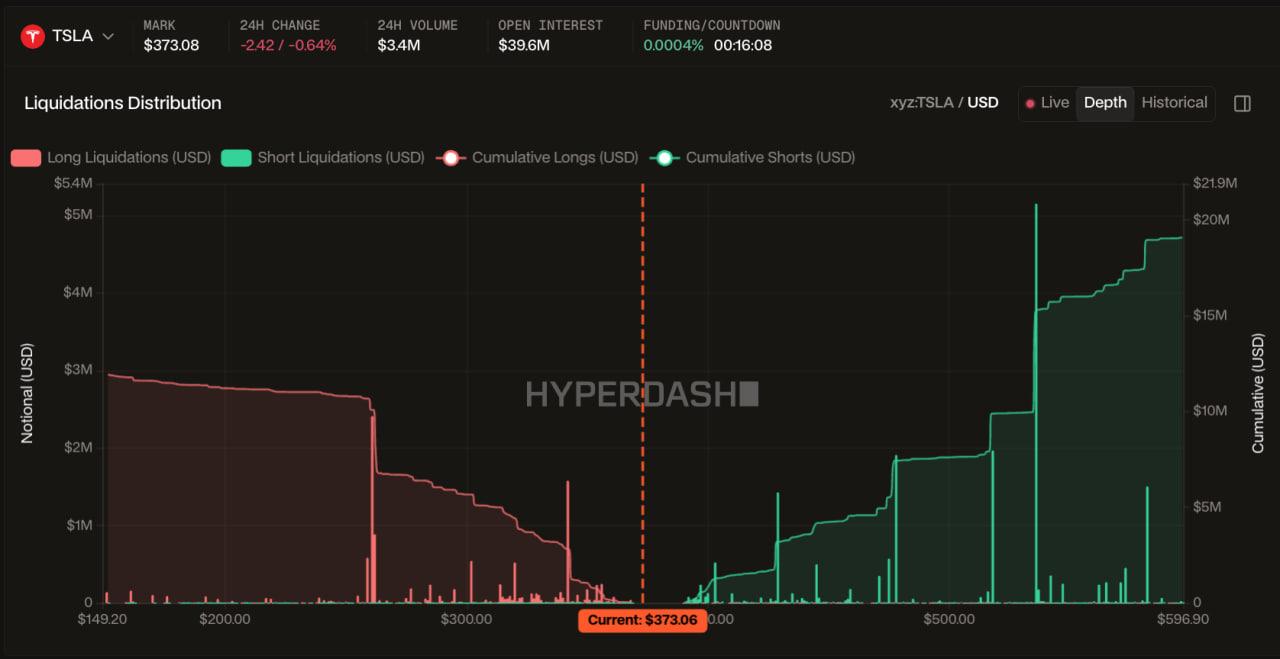
Hyperdash gives you the tools to exploit this. By using the Real-Time Liquidation Heatmap, you can see exactly where other traders have clustered their stop-losses. While traditional traders are completely blind until Monday, you can visualize the exact price levels that will trigger cascading liquidations and position yourself accordingly.
Stop Waiting for the Bell
The era of bankers' hours is over. The $100 billion in volume flowing through Hyperliquid's markets proves that when given the choice, capital demands continuous, permissionless access.
You can either continue to accept the unquantifiable risk of the weekend gap, or you can take control of your execution.
[Access 24/7 Markets on Hyperdash Now]
Frequently Asked Questions
Is it safe to trade crypto and on-chain assets on weekends?
While the infrastructure (Hyperliquid) is highly secure and operates continuously, weekend markets can experience lower liquidity. This can lead to higher volatility and wider spreads. It is crucial to use strict risk management and adjust your position sizing accordingly.
Am I buying actual shares of the S&P 500?
No. You are trading a perpetual futures contract (a derivative) that tracks the real-time price of the S&P 500 index. You are speculating on the price movement using USDC as collateral, not taking custody of physical equities.
Why do I need USDC?
USDC is a fully backed US Dollar stablecoin. Hyperliquid uses it as the universal settlement currency. This means you don't need to hold Bitcoin to trade crypto, or physical dollars to trade oil, one USDC balance powers your entire portfolio.