Understanding Crypto Market Cycles: Bull Runs, Bear Markets & Accumulation
January 27, 2026
By Hyperdash
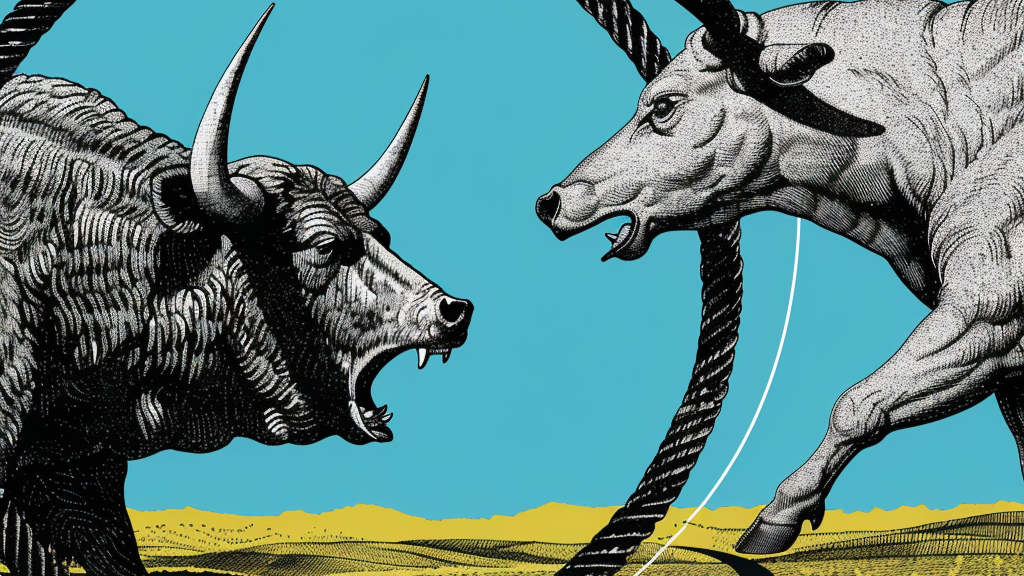
Crypto markets are cyclical. They have always been cyclical. Understanding where you are in the cycle is one of the most valuable skills a trader can develop, because it determines which strategies work, how aggressively to size positions, and when to play defense. The traders who survive multiple cycles are the ones who recognized the pattern and adapted. The ones who blew up are the ones who assumed the current trend would last forever.
Published
January 27, 2026
Author
Hyperdash
Reading time
8 min read
Category
Market Analysis
Why Crypto Markets Are Cyclical
Crypto's cyclicality stems from a combination of factors: the Bitcoin halving cycle (which reduces new BTC supply roughly every four years), the reflexive nature of speculative markets (rising prices attract capital, which drives prices higher, until the cycle reverses), and the emotional psychology of market participants who oscillate between greed and fear.
Traditional markets are cyclical too, but crypto cycles are compressed and amplified. What might take a decade in equities plays out in two to four years in crypto. The drawdowns are deeper (70-90% from peak to trough is normal), and the rallies are more explosive (10x-100x moves in altcoins during bull runs). This compression makes understanding cycles even more critical for crypto traders.
The Four Phases
Crypto market cycles consist of four phases: accumulation, markup (bull market), distribution, and markdown (bear market). Each phase has distinct characteristics in price action, volume, sentiment, and trader behavior. Knowing which phase you are in is arguably more important than any technical indicator.
Accumulation
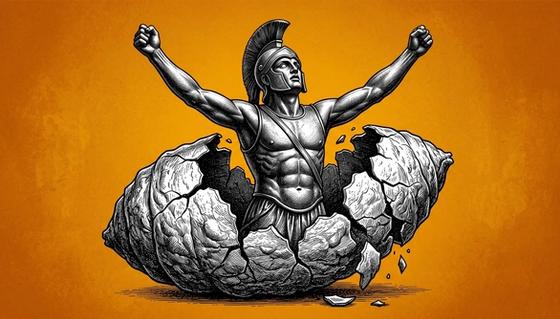
After a prolonged bear market, price stabilizes in a range. Volume is low, public interest has faded, and sentiment is deeply negative. This is when informed traders and institutions quietly build positions. The market feels dead -- and that is exactly the point. Most retail traders are too burned from the bear market to participate, creating the conditions for the next cycle.
During accumulation, you will notice several key characteristics. Social media engagement around crypto drops dramatically. Google Trends for terms like "buy Bitcoin" hit multi-year lows. Crypto media outlets publish articles questioning whether the industry will survive. Projects with weak fundamentals die off, while strong projects continue building. This is historically the highest expected-value time to deploy capital, but it requires the conviction to buy when everything feels hopeless.
On-chain metrics during accumulation often show long-term holders (wallets that have not moved their coins in over a year) increasing their positions. Exchange balances decline as investors move coins to cold storage, signaling long-term holding intent rather than active trading. Open interest on perpetual futures contracts is typically low, reflecting reduced speculative activity.
Markup (Bull Market)
Price breaks out of the accumulation range and begins a sustained uptrend. Early gains attract attention, which brings new capital, which drives further gains. Media coverage increases, social media activity spikes, and new participants flood in. This is the most exciting -- and most psychologically dangerous -- phase of the cycle.
Bull markets typically unfold in stages. Bitcoin leads first, as it is the most liquid and the gateway asset for institutional capital. Then capital rotates to large-cap altcoins like ETH. Eventually, speculation reaches smaller altcoins, meme coins, and new narratives. By the time your non-crypto friends are asking you about a dog-themed token, you are likely in the late stages of the markup phase.
Momentum strategies work well during markup. Trend-following systems, breakout trades, and buying dips in strong uptrends are all effective. Funding rates tend to be positive as traders pile into longs, which is normal and sustainable during a healthy bull trend -- it only becomes a warning sign when funding reaches extreme levels.
Position sizing should be more aggressive during confirmed markup phases, but never reckless. The biggest mistake traders make during bull markets is assuming the trend will never end and abandoning risk management entirely. Even within bull markets, 30-40% corrections are common and can liquidate overleveraged positions.
Distribution
At the top of the cycle, early buyers begin taking profits. Price volatility increases. The market makes higher highs but with declining momentum and increasing divergences in indicators like open interest and RSI. Sentiment is at peak euphoria -- everyone is a genius and no one expects a downturn. This is the most dangerous phase for overleveraged longs.
Distribution is the hardest phase to identify in real time because it looks like the bull market is continuing. Price may even make new all-time highs. But beneath the surface, smart money is selling into retail buying. You can spot distribution by watching for divergences: price making new highs while RSI makes lower highs, declining volume on rallies, increasing volume on sell-offs, and a rotation from quality assets into increasingly speculative and low-quality tokens.
On-chain metrics are particularly useful during distribution. Watch for long-term holders beginning to sell, exchange inflows increasing (coins moving from cold storage to exchanges for potential sale), and realized profit metrics reaching extreme levels. Funding rates may become volatile, oscillating between extremes as the market churns.
Markdown (Bear Market)
The downtrend begins. Denial gives way to fear, then panic. Liquidation cascades accelerate the decline. Volume spikes on sell-offs. The market retraces a significant portion of the bull run gains. Bear markets are where most retail traders lose their gains from the bull market -- and then some.
Bear markets typically have multiple phases of their own. The initial crash from the distribution top is violent and fast. Then there is often a relief rally (sometimes called a "dead cat bounce" or a "bull trap") that convinces many traders the bottom is in. This is followed by a slower, grinding decline that can last months, testing the patience of even the most convicted holders. The final capitulation event -- a sharp sell-off on high volume -- often marks the true bottom.
During markdown, capital preservation is the priority. Experienced traders reduce position sizes, increase cash allocations, focus on shorting opportunities if they have the skill, and avoid the temptation to "buy the dip" too early. Bear markets last longer than most people expect, and catching falling knives is one of the fastest ways to deplete an account.
Trading the Cycle
The key insight is that different strategies work in different phases. Trend-following and momentum work in markup. Mean-reversion and range trading work in accumulation. Shorting and capital preservation work in markdown. Trying to use bull market strategies in a bear market -- or vice versa -- is one of the most common and costly mistakes traders make.
Practically, this means you need to regularly step back and assess the macro environment. Ask yourself: where are we in the cycle? What does sentiment look like? Are funding rates extreme? Is leverage building up? Are new participants entering or leaving? Is social media activity increasing or decreasing? These contextual questions should inform your strategy selection, position sizing, and risk tolerance.
One useful framework is to think of your capital allocation in terms of cycle phase: during accumulation, deploy capital into spot positions and reduce leverage. During markup, increase exposure and trade with momentum. During distribution, take profits aggressively and raise cash. During markdown, prioritize capital preservation and wait for the next accumulation phase.
Historical Context
Bitcoin has gone through four major market cycles since its inception: the 2011 cycle (peak around $31, crash to $2), the 2013 cycle (peak around $1,100, crash to $200), the 2017 cycle (peak around $20,000, crash to $3,200), and the 2021 cycle (peak around $69,000, crash to $15,500). Each cycle brought the price to new all-time highs and attracted a new wave of participants, but the pattern of boom and bust remained consistent. Understanding this history helps you maintain perspective when the current cycle feels unprecedented -- it never is.
Hyperdash Tip: Hyperdash's market data tools on Hyperliquid help you gauge cycle positioning. Monitor aggregate open interest, funding rates, and top trader behavior to identify which phase the market is in. Watching how professional traders adjust their positioning across cycle phases is one of the most practical ways to develop your own cycle awareness.
Frequently Asked Questions
How long do crypto market cycles typically last?
Historically, full crypto market cycles have lasted roughly four years, loosely correlated with the Bitcoin halving schedule. The halving reduces the rate of new BTC issuance every four years, which has historically coincided with the start of new bull markets. However, each cycle is different, and external factors -- regulatory changes, macroeconomic conditions, technological developments -- can compress or extend cycle timing. Do not try to predict exact cycle tops or bottoms. Instead, focus on identifying which phase you are in and adapting your strategy accordingly.
Can I time the market top?
Timing the exact top is nearly impossible, and trying to do so often leads to worse outcomes than following a disciplined exit strategy. Instead of trying to sell at the peak, consider scaling out of positions as euphoria indicators increase: extreme funding rates, parabolic price action, widespread media coverage, and unsolicited crypto advice from people who have never traded before. Selling in increments on the way up ensures you capture significant gains even if you miss the exact top.
What should I do during a bear market?
Bear markets are for learning, building skills, and preserving capital. Reduce your position sizes dramatically. Focus on education: study price action, refine your trading system, and review your bull market trades to identify what worked and what did not. If you trade during bear markets, focus on short setups and keep leverage minimal. Many of the best traders use bear markets as preparation time so they are ready to capitalize when the next accumulation phase begins.
Are altcoins more cyclical than Bitcoin?
Yes, significantly. Altcoins tend to amplify Bitcoin's cycle in both directions. During bull markets, altcoins often outperform BTC by large multiples as speculation increases. During bear markets, most altcoins decline 90-99% from their highs, and many never recover. This is why experienced traders focus on Bitcoin and major altcoins for core positions and treat smaller altcoins as high-risk, high-reward speculative plays with strict position sizing.