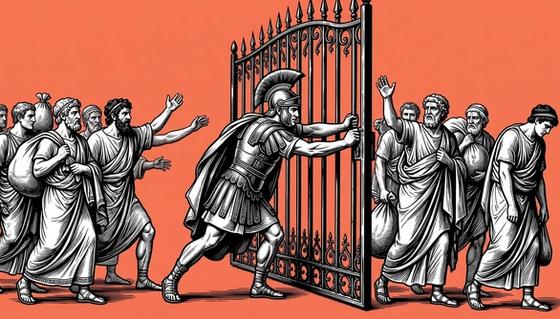
Bitmex is closing: Here's What Traders Can Do Now

July 29, 2026
By Hyperdash
The era of the original crypto derivatives giant is ending. BitMEX officially announced it will cease operations on September 23, 2026. For the remaining traders on the platform, the clock is ticking to withdraw funds and find a new home for their perpetual futures trading.
Published
July 29, 2026
Author
Hyperdash
Reading time
5 min read
Category
Security & Safety
While BitMEX’s market share collapsed to below 0.01% in recent years, a stark contrast to its 2018 dominance, the closure still leaves thousands of traders needing a reliable venue. But migrating to another centralized exchange (CEX) misses the structural shift that has already happened in the market: decentralized perpetual futures captured roughly 80% of the market volume in 2026.
If you are looking for a BitMEX alternative, the answer isn't another offshore CEX. It's moving to on-chain perpetuals.
The BitMEX Closure Timeline and Fees
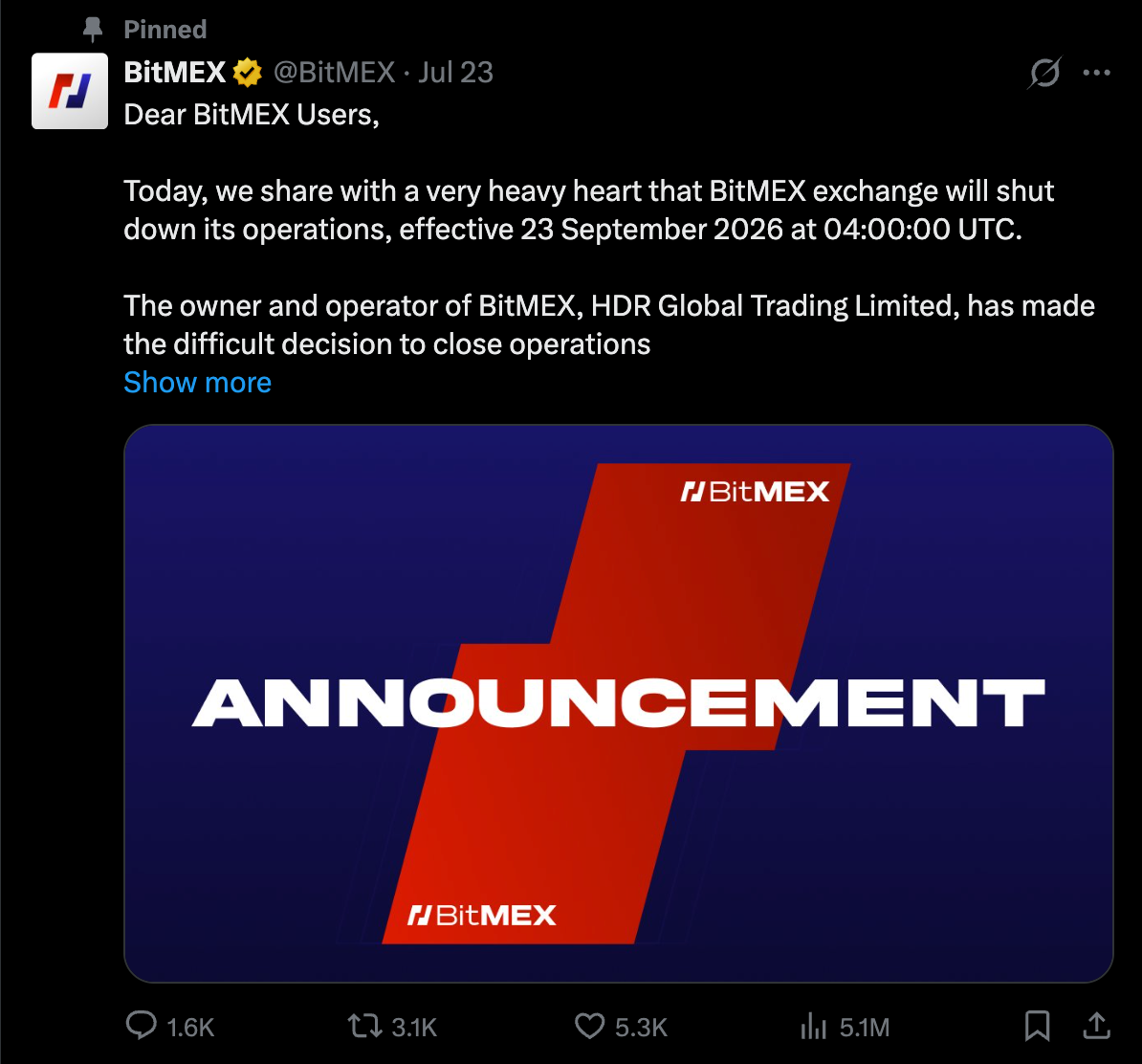
According to the official BitMEX announcement, the wind-down process is strictly scheduled:
- August 23, 2026: All trading halts. Open positions will be force-closed.
- September 23, 2026: The platform goes offline permanently.
- Withdrawal Fees: Standard network fees apply until September 23. After this date, any remaining funds will be subject to a 5% recovery fee (minimum $50) if manually processed by the liquidator.
Traders must act before August 23 to manage their own position exits, and before September 23 to avoid punitive withdrawal penalties.
Why Another CEX Isn't the Answer
BitMEX’s downfall, accelerated by $230 million in regulatory fines and leadership convictions, is a textbook example of counterparty risk. When you trade on a CEX, you don’t own your assets; you own an IOU in the exchange’s database.
We’ve seen this play out repeatedly. Whether it’s regulatory crackdowns, hacks, or insolvency, why centralized exchanges can freeze your funds is a structural flaw of the CEX model, not an isolated incident. Moving your Bitcoin perpetual futures trading from BitMEX to another offshore CEX simply transfers the exact same risk to a new entity.
The Shift to On-Chain Perpetuals
The market has already voted with its capital. Why traders are moving from CEX to DEX is driven by three core advantages that on-chain trading now offers:
- Self-Custody: You hold your funds in your own wallet until the exact moment of trade settlement. There is no exchange wallet to be hacked or frozen.
- Transparency: Every trade, liquidation, and funding rate calculation is verifiable on-chain.
- Performance: Modern infrastructure has solved the speed issues of early DEXs. Platforms like Hyperdash execute trades in milliseconds, matching CEX performance.
Hyperdash: The Premier BitMEX Alternative
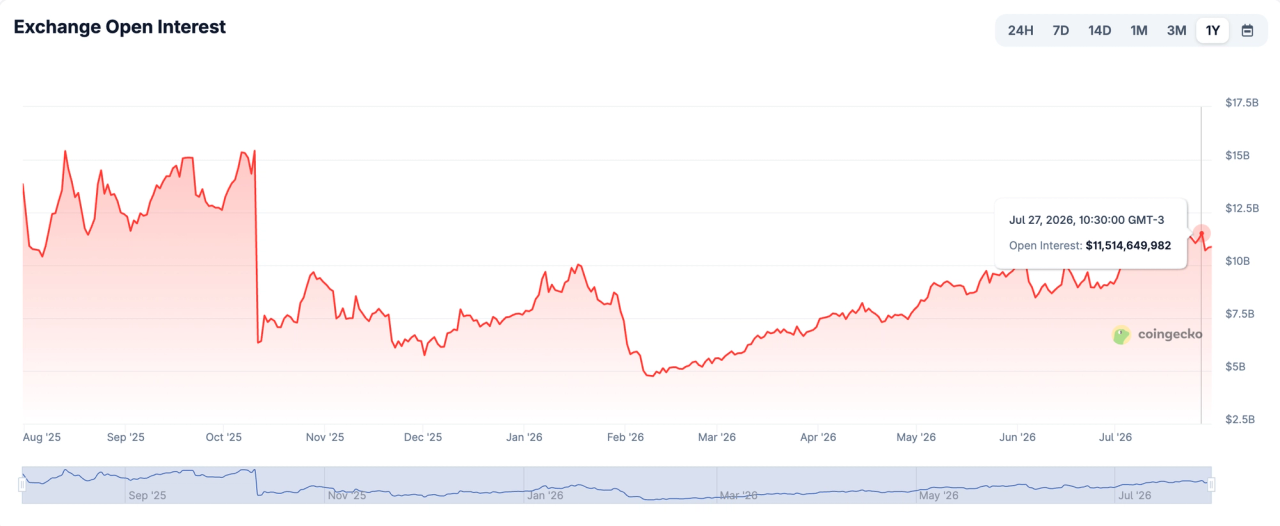
For traders accustomed to BitMEX’s deep liquidity and perpetual contracts, Hyperdash offers a seamless transition with structural upgrades. Operating as the advanced trading terminal for the Hyperliquid L1, which currently holds over $11.5 billion in open interest, Hyperdash provides the professional toolset CEX traders expect, but with the security of on-chain settlement.
Here is how Hyperdash compares to the legacy BitMEX experience:
Comparison: Legacy BitMEX vs Hyperdash
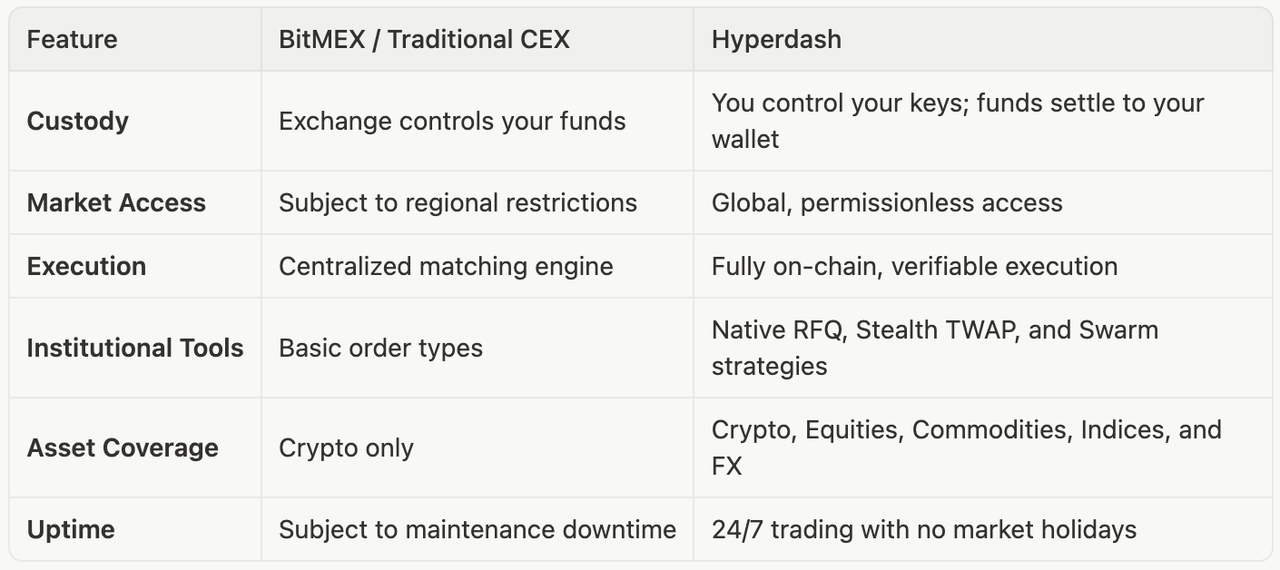
The transition from legacy centralized exchanges to on-chain infrastructure is driven by a fundamental shift in asset coverage and liquidity depth. While BitMEX was strictly limited to crypto derivatives, Hyperdash provides a unified terminal for trading across multiple asset classes on-chain. Whether you are trading Bitcoin perpetual futures trading, looking to go long on Ethereum perpetuals, or hedging your portfolio with gold futures and Solana perpetuals, you can manage your entire portfolio from a single interface without surrendering custody of your assets.
This expanded market access is supported by institutional-grade liquidity. With over $11.5 billion in open interest and $4.5 billion in 24-hour trading volume, the underlying network powering Hyperdash consistently offers deeper order books and tighter spreads than most centralized competitors. This level of verifiable, on-chain execution ensures that your trades settle instantly to your own wallet, completely removing the counterparty risk that ultimately doomed BitMEX.
For traders migrating significant size, this combination of self-custody and deep liquidity unlocks execution strategies previously unavailable in DeFi. Instead of relying on basic market and limit orders, professional traders are utilizing advanced algorithmic execution to minimize slippage on large block trades.
How to Migrate Your Funds
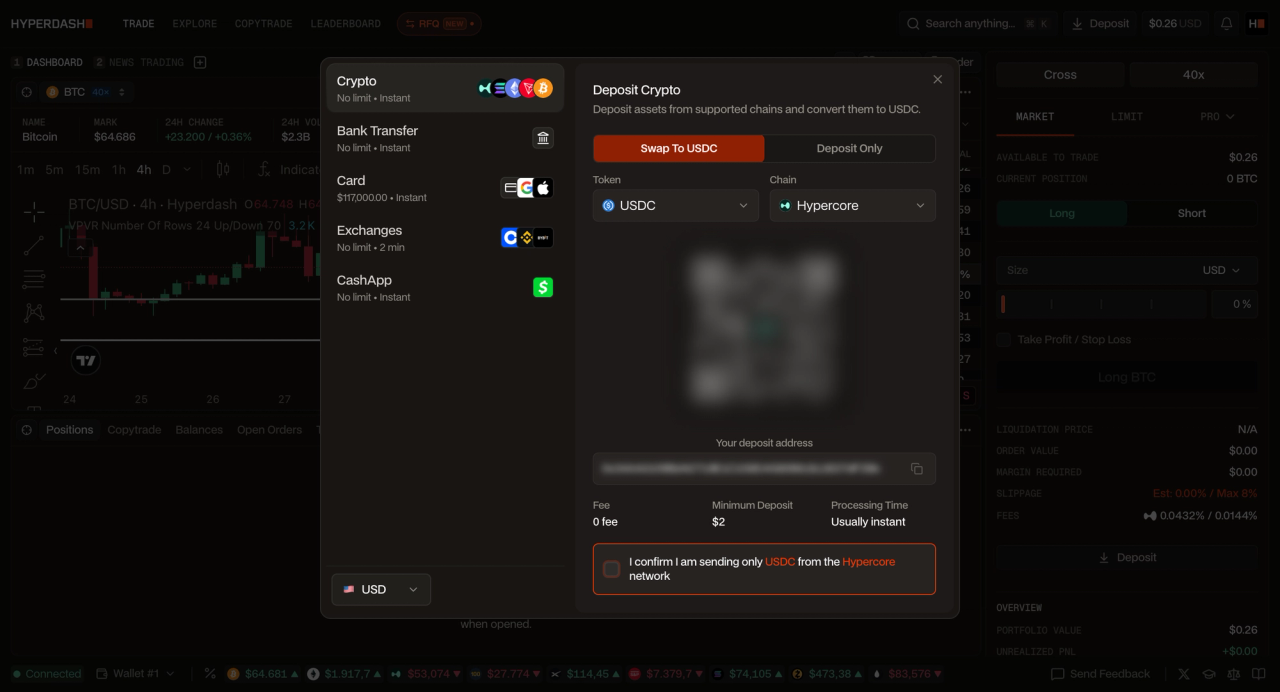
Migrating from BitMEX to Hyperdash is a straightforward process:
- Close BitMEX Positions: Ensure all open positions on BitMEX are closed before the August 23 trading halt to avoid forced liquidations at unfavorable prices.
- Withdraw to Personal Wallet: Initiate a withdrawal from BitMEX to your personal hardware or Web3 wallet (e.g., MetaMask, Rabby). Do not withdraw directly to another exchange.
- Bridge to Hyperliquid: Use the native bridge to move your USDC or native assets onto the Hyperliquid L1.
- Connect to Hyperdash: Go to Hyperdash, connect your wallet, and you are ready to trade.
The closure of BitMEX is the end of an era, but it shouldn't be a disruption to your trading. By moving to on-chain perpetuals, you upgrade your security model while maintaining access to deep, global liquidity.
Frequently Asked Questions (FAQ)
When is the exact date BitMEX is shutting down?
BitMEX will halt all trading on August 23, 2026, and the platform will go offline completely on September 23, 2026.
What happens if I don't withdraw my funds from BitMEX in time?
If you do not withdraw before September 23, 2026, recovering your funds will require manual processing by a liquidator and will incur a 5% fee (minimum $50).
What is the best alternative to BitMEX?
For traders looking to maintain access to deep perpetual futures liquidity without the counterparty risk of a centralized exchange, Hyperdash is the premier alternative, offering on-chain settlement and self-custody.
Can I trade the same assets on Hyperdash that I traded on BitMEX?
Yes, Hyperdash supports over 150 assets, including major cryptocurrencies, foreign exchange, and select equities, all via perpetual futures.
Do I need to complete KYC to trade on Hyperdash?
No. Because Hyperdash operates on decentralized infrastructure, you simply connect your Web3 wallet to begin trading. There is no centralized entity holding your funds or requiring identity verification.
Disclaimer: This article is for informational purposes only and does not constitute financial, investment, or legal advice. The information presented reflects publicly available data at the time of publication and may be subject to change. Trading perpetual futures and other leveraged instruments involves a significant risk of loss and may not be suitable for all investors. Past performance is not indicative of future results. Always conduct your own research and consult a qualified financial advisor before making any investment decisions. Hyperdash does not guarantee the accuracy or completeness of third-party data referenced in this article.