How HyperCore Powers Performance Across Hyperliquid
May 27, 2025
By Hyperdash
Learn about HyperCore and how it powers the Hyperliquid blockchain. You will also learn how it handles staking, HYPE validators, and everything else.
Published
May 27, 2025
Author
Hyperdash
Reading time
4 min read
Category
Hyperliquid 101
What Is HyperCore? A Complete Guide
Heard of HyperCore but not sure what it actually does? If you’re using the Hyperliquid blockchain, it’s already working behind the scenes, quietly powering every trade, stake, and smart contract without asking for attention. This “What is HyperCore” explainer breaks it down in plain terms.
What is HyperCore?
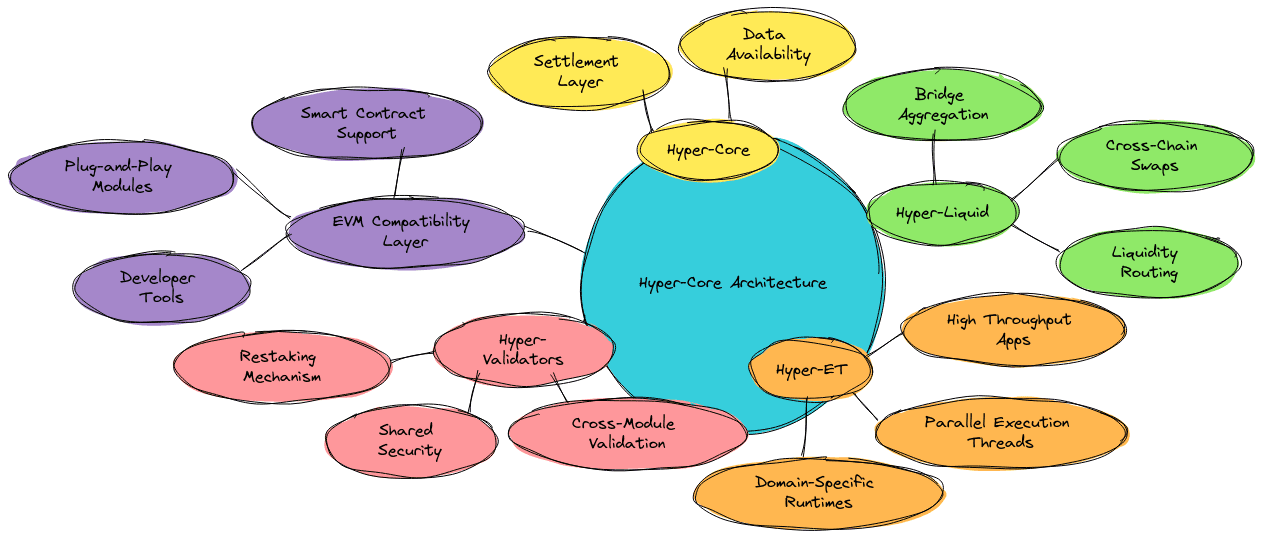
HyperCore is the engine behind the Hyperliquid blockchain. It’s what takes your transaction, processes it, and wraps it into a block in milliseconds. You can think of it like the pit crew in a Formula 1 race. You don’t always see them, but without them, nothing works.
While many blockchains focus on layering EVM onto slow consensus systems, HyperCore is built for speed. It processes transactions and finalizes blocks in a fraction of a second, delivering near-instant performance that keeps the network responsive and fluid.
But speed’s only one part. HyperCore also handles finality. Once a trade or stake is in, it’s done. No anxious waiting. No “pending” sign flashing at you. Where most chains stitch together external tools to handle execution, validation, and smart contracts, HyperCore handles it natively.
How HyperCore Powers Seamless Transactions
When people say Hyperliquid feels snappy, this is the reason: HyperCore.
Behind the scenes, every user request, whether placing an order or querying a smart contract, moves through Hyperliquid RPC nodes or API servers. These nodes connect directly to HyperCore to enable real-time execution.
RPC nodes (Remote Procedure Call nodes) are how wallets, apps, and frontends interact with the blockchain. On Hyperliquid, these nodes are tightly integrated with HyperCore, removing the need for extra layers that slow things down. You get direct access to the engine, with no detours and no delays.
Who Founded Hyperliquid?
Hyperliquid was founded by Jeff Yan and iliensinc, two Harvard classmates with high-frequency trading and blockchain infrastructure backgrounds. Their goal was simple: build a trading-first Layer 1 that doesn’t compromise speed or self-custody. They didn’t start with an Ethereum fork or bolt-on modular fix. They built HyperCore first as the chain’s native execution engine and launched Hyperliquid around it.
How HyperCore Supports the Hyperliquid Network
HyperCore is the part of the chain that gets things done. It handles execution, validation, settlement, and order flow all in one layer. There’s no separate rollup or plug-in module. Everything runs directly through HyperCore.
This structure avoids chain delays that rely on off-chain sequencers or modular designs. On Hyperliquid, trades, liquidations, and staking updates don’t bounce between systems. HyperCore processes them in one pass. For instance, every market action, from placing a limit order to triggering a liquidation, is handled in real-time.
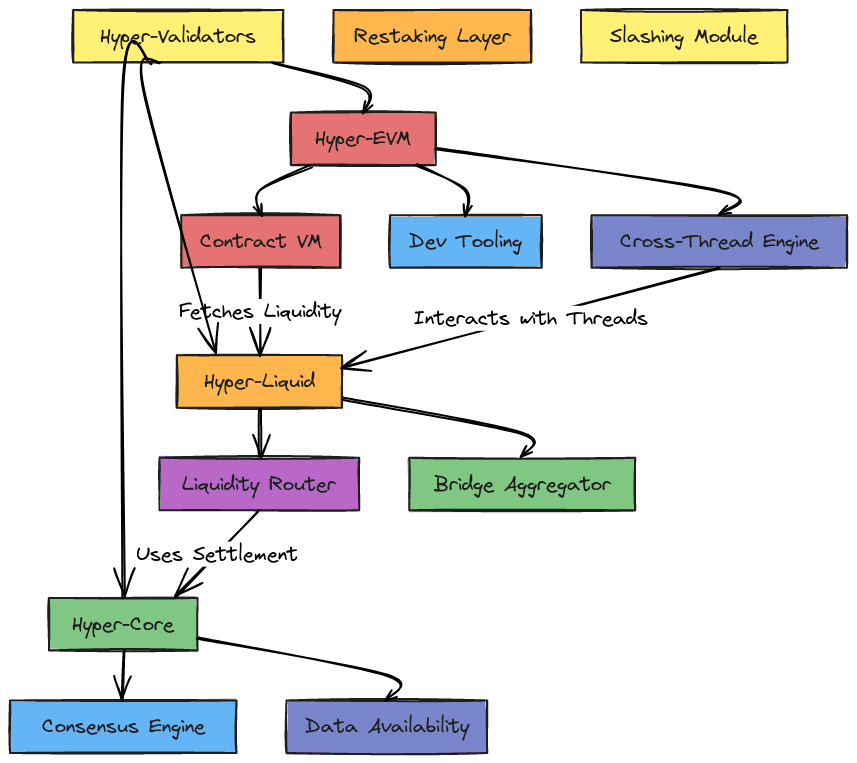
It’s also why Hyperliquid validators can operate with clear, direct input from the core layer. They don’t need sidecar infrastructure to sync states or validate delayed finality. HyperCore pushes finalized blocks straight into the chain with no extra steps.
This approach also supports HyperEVM. Smart contracts interact with the same execution pipeline and consensus used for trading, so there’s no translation layer slowing things down!
What Do Hyperliquid Validators Do?
Hyperliquid validators help run the network. They check transactions, propose new blocks, and keep the Hyperliquid chain secure and moving without delays.
What makes them different is how they interact with HyperCore. Since execution, staking, and finality run through the same system, validators don’t need to manage external consensus layers or delayed state updates. They operate with full visibility and direct access to the chain’s live data.
Hyperliquid uses a custom consensus protocol called HyperBFT, a variation of Byzantine Fault Tolerance designed for high-speed finality. It lets validators agree on blocks quickly, helping HyperCore execute trades and contract logic without delays or rollbacks.
This setup reduces complexity, speeds up finality, and keeps validator actions tightly synced with real-time network activity.
What is HyperEVM?
HyperEVM is the smart contract layer built on top of HyperCore. It’s fully EVM-compatible, which means developers can deploy Solidity contracts without learning a new stack. But the difference lies underneath.
Unlike chains that attach EVM onto slow consensus layers, HyperEVM is secured by the same HyperBFT consensus as HyperCore. This means contracts can read HyperCore state and send actions to it through CoreWriter with no external bridges. HyperEVM blocks follow their own cadence: small blocks every second and big blocks every minute.
HyperCore: Closing Thoughts
HyperCore is what makes Hyperliquid fast, consistent, and trustworthy. It’s not just a performance boost: it’s the reason the chain works as a full-stack system, from validators to smart contracts. Everything the user touches (trades, staking and smart contracts) flows through HyperCore. That’s what sets it apart from other chains trying to stitch speed onto outdated systems.
FAQs
What is HyperCore?
It’s the execution engine that powers the Hyperliquid blockchain. From trades to staking and validator finality, HyperCore runs it all without relying on external layers or rollups.
Is HyperCore open-source?
No. As of now, HyperCore is proprietary and not publicly open-sourced.
Can you run a validator without staking HYPE?
No. Staking HYPE is required to become an active validator on the Hyperliquid blockchain: each validator needs a 10,000 HYPE self-delegation, and the active set is the top 27 validators by stake.
What’s the best way to monitor validator stats on Hyperliquid?
The most reliable way to track validator stats is the Validator Performance table on Hyperliquid’s staking page, which shows each validator’s stake, uptime, estimated APR and commission rate, ideal for anyone staking HYPE or comparing validator reliability.