Why Perpetuals Are Better Than CFDs 10 Times Out Of 10

May 12, 2026
By Hyperdash
The short answer: Traditional Contracts for Difference (CFDs) are structurally designed to favor the broker. They charge hidden overnight fees, manipulate spreads during volatility, and can freeze your withdrawals at will. On-chain perpetual futures eliminate the middleman, offering transparent fees, deeper liquidity, and true self-custody.
Published
May 12, 2026
Author
Hyperdash
Reading time
5 min read
Category
Perps vs CFDs
If you are still trading CFDs in 2026, you are paying a premium to play a rigged game.
In this guide, we will break down exactly how CFDs extract value from retail traders, and why professional traders have migrated to decentralized perpetual futures on platforms like Hyperliquid.
1. The House Always Wins: The CFD Market Maker Model
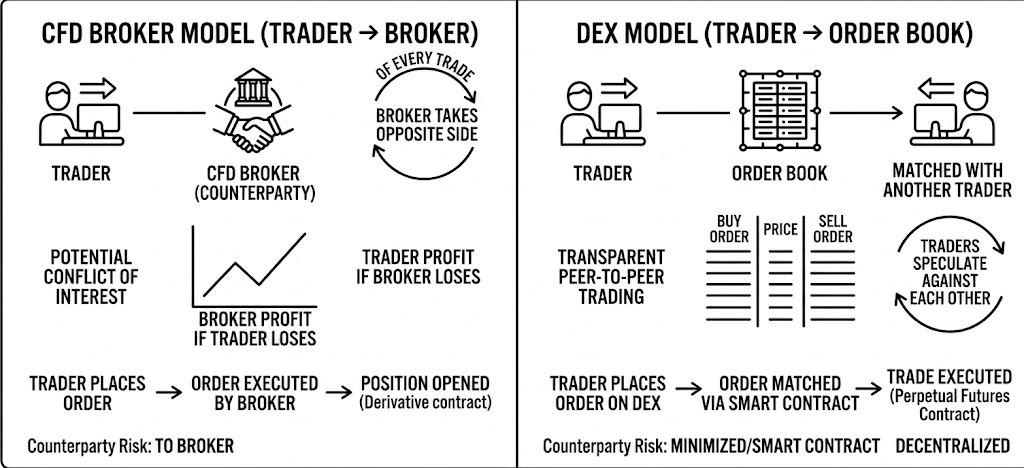
When you trade a CFD, you are not actually interacting with the open market. You are entering into a private contract with your broker.
In most cases, CFD brokers act as "B-Book" market makers. This means they take the opposite side of your trade. If you go long on gold, the broker is effectively shorting gold against you.
This creates a massive conflict of interest. When you lose money, the broker profits directly.
Because the broker controls the price feed on their proprietary platform, they have the power to widen spreads right before a major news event, triggering your stop-loss order before the price reverses in your favor. This practice, known as "stop hunting," is rampant in the CFD industry.
The On-Chain Alternative: True Peer-to-Peer Trading
Perpetual futures on decentralized exchanges (DEXs) like Hyperliquid operate on a completely different model. There is no broker taking the other side of your trade. You are trading against a global, decentralized order book of other traders and independent market makers.
The exchange itself simply matches buyers and sellers and takes a flat, transparent execution fee. Whether you win or lose your trade, the exchange makes the exact same amount of money. There is zero incentive to manipulate prices or hunt stop losses.
2. The Hidden Cost of Holding: Swap Fees vs. Funding Rates
If you hold a CFD position overnight, your broker will charge you a "swap fee" or "rollover fee."
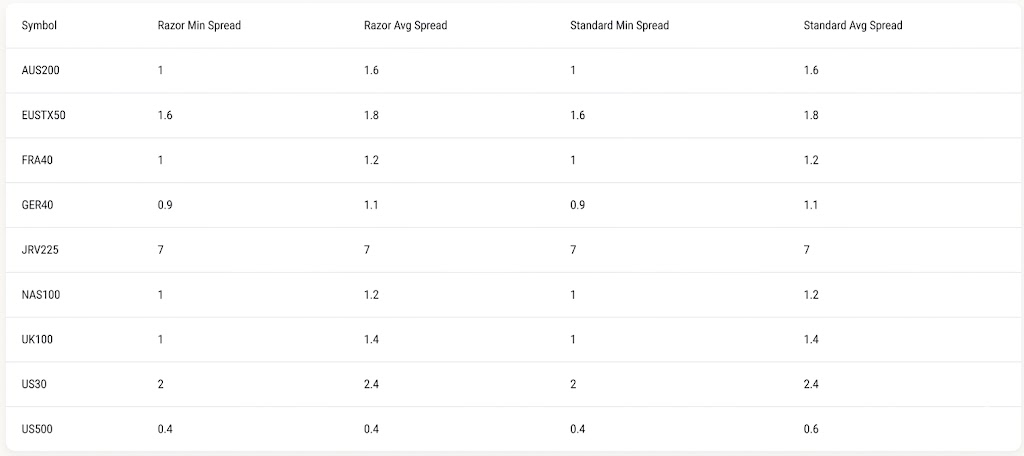
This fee is ostensibly to cover the cost of leverage, but in reality, it is a massive profit center for the broker. Swap fees are often heavily skewed. If you are long, you might pay 5% annualized. If you are short, instead of receiving a credit, you might still pay 2% annualized. The broker pockets the difference.
Over weeks or months, these overnight fees silently erode your profit margin, making it mathematically impossible to hold swing trades profitably.
The Perpetual Solution: Symmetrical Funding Rates
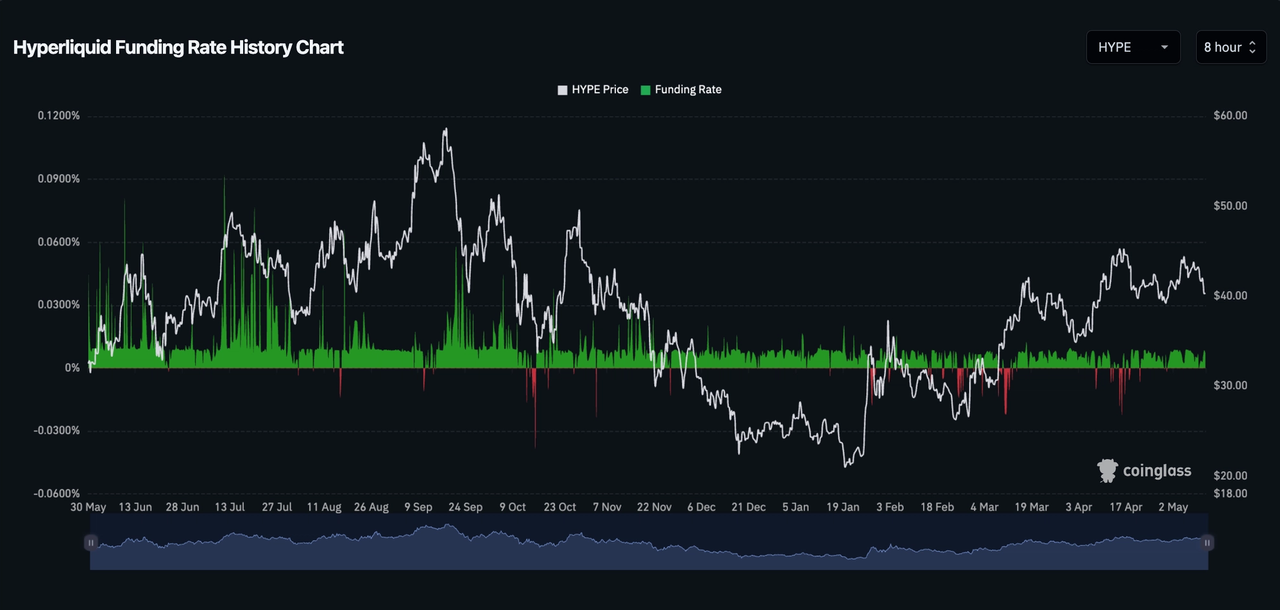
Perpetual futures do not charge overnight fees to the exchange. Instead, they use a peer-to-peer mechanism called the Funding Rate.
Because perpetual futures never expire, the funding rate is used to keep the price of the contract tethered to the underlying spot price.
- If the perpetual contract is trading above the spot price, the funding rate is positive. Traders who are Long pay a small fee directly to traders who are Short.
- If the perpetual contract is trading below the spot price, the funding rate is negative. Traders who are Short pay traders who are Long.
This system is perfectly symmetrical. The exchange takes zero cut of the funding rate. It is simply a mechanism to balance the market. Smart traders actually use funding rates to their advantage, getting paid to hold positions that help balance the order book.
3. The Custody Problem: Not Your Keys, Not Your Coins
The ultimate risk of trading CFDs is counterparty risk. When you deposit funds into a CFD broker, you are handing over legal ownership of your money. You are relying entirely on the broker's solvency and their willingness to process your withdrawal.
If the broker goes bankrupt, as many did during the Swiss Franc unpegging in 2015, your funds are trapped in years of litigation. Furthermore, if you become too profitable, CFD brokers are notorious for limiting your leverage, restricting your trading size, or simply freezing your account and refusing withdrawals under the guise of "compliance checks."
The DeFi Standard: Self-Custody
When you trade perpetual futures on a DEX like Hyperliquid, you never give up custody of your funds.
Your USDC collateral remains in your Web3 wallet (like MetaMask or Rabby) until the exact moment a trade is executed or liquidated by an audited smart contract.
You do not need to ask for permission to withdraw your profits. You simply click a button, and the smart contract instantly routes your funds back to your wallet. There are no "compliance checks," no multi-day withdrawal delays, and no risk of the exchange freezing your account because you were too profitable.
4. The Final Nail: KYC and Global Access
To open a CFD account, you must navigate a labyrinth of Know Your Customer (KYC) and Anti-Money Laundering (AML) regulations. You must upload your passport, provide utility bills, and prove your source of wealth. Depending on your jurisdiction, you may be completely blocked from trading certain assets or restricted to cripplingly low leverage limits (like the 30:1 cap in Europe).
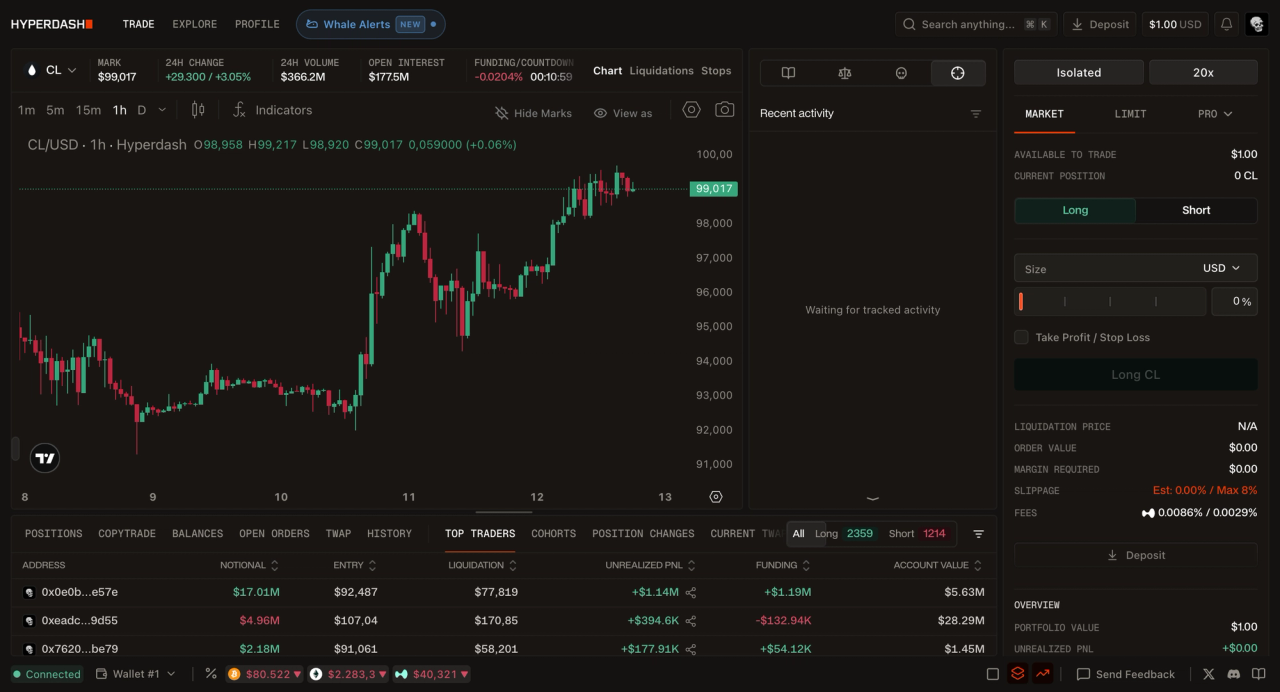
Decentralized perpetual exchanges are permissionless. All you need is a Web3 wallet and an internet connection. You can trade from anywhere in the world, with up to 50x leverage, while maintaining complete financial privacy.
Conclusion: Upgrade Your Execution
CFDs were a necessary evil in the 2010s when retail traders had no other way to access leveraged global markets. But the technology has evolved.
On-chain perpetual futures offer everything CFDs do; leverage, short-selling, and diverse asset classes. But without the predatory fees, the market manipulation, and the counterparty risk.
Stop trading against the house. Upgrade to the decentralized order book and take control of your execution with the Hyperdash terminal.
Frequently Asked Questions (FAQ)
What is the difference between a CFD and a perpetual future?
A CFD is a private contract between you and a broker, where the broker usually takes the opposite side of your trade. A perpetual future is a peer-to-peer derivative traded on an open order book, where the exchange simply matches buyers and sellers without taking a position against them.
Do perpetual futures charge overnight fees?
No. Perpetual futures use a peer-to-peer mechanism called the funding rate. Depending on market conditions, you may pay a small fee or actually get paid to hold your position. The exchange does not take a cut of this rate.
Can I trade stocks and commodities with perpetual futures?
Yes. While perpetuals started with crypto, decentralized exchanges like Hyperliquid now offer perpetual futures on major forex pairs, commodities like gold and oil, and even equities.
Is it safe to trade without KYC?
Trading on a decentralized exchange is permissionless, meaning you maintain complete financial privacy. However, because there is no central authority, you are entirely responsible for the security of your own Web3 wallet. Always use best practices for self-custody.
Disclaimer: The information provided in this article is for educational purposes only and does not constitute financial, investment, or trading advice. Trading leveraged derivatives, including perpetual futures and CFDs, carries a high level of risk and may not be suitable for all investors. You could lose some or all of your initial investment. Always conduct your own research and consult with a certified financial advisor before making any trading decisions.