Why Hyperliquid Is Becoming The Everything Exchange
July 25, 2025
By Hyperdash
The HIP-3 Hyperliquid upgrade is helping Hyperliquid become more than just another trading platform. It introduces a way for anyone, not just the Hyperliquid team, to create and launch their trading markets directly on the exchange. This is possible through "on-chain deployment," meaning everything happens on the blockchain, without middlemen or approvals.
Simply put, HIP-3 removes the gatekeepers. And that's a big shift in how Hyperliquid works.
Published
July 25, 2025
Author
Hyperdash
Reading time
4 min read
Category
Hyperliquid 101
HIP-3 has been live on Hyperliquid mainnet since October 2025, enabling permissionless deployment of perpetual markets under on-chain constraints set out in the official HIP-3 specification.
HIP-3 and Why It Matters for Hyperliquid
HIP-3 stands for "Hyperliquid Improvement Proposal 3." It's a system update that allows users to create trading pairs, like BTC/ETH or SOL/USDT, directly on the Hyperliquid blockchain. These user-created markets are called builder-deployed perps. "Perps" means perpetual contracts, like futures contracts, but without expiry dates. And "builder-deployed" means the markets are created by external developers, not the Hyperliquid core team.
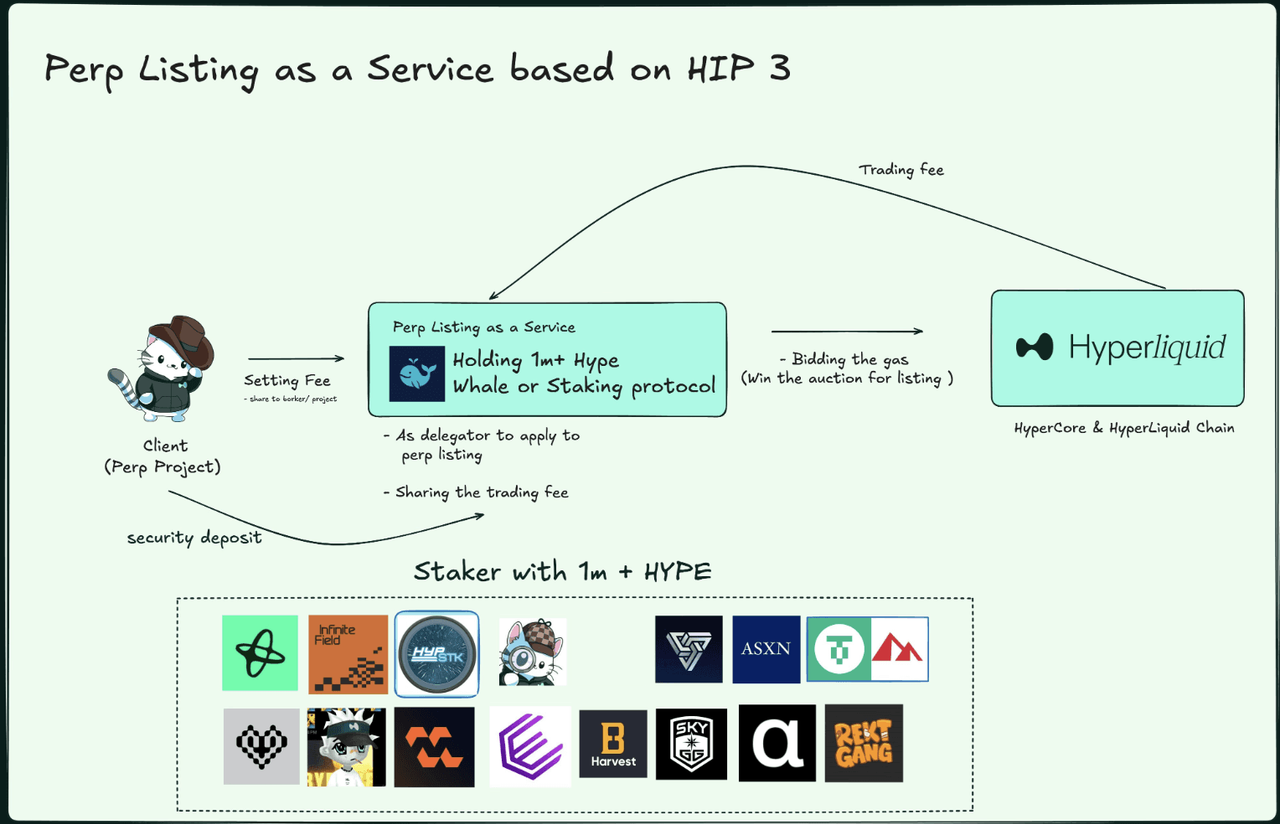
Deployer Actions and Builder-Deployed Perps on Hyperliquid
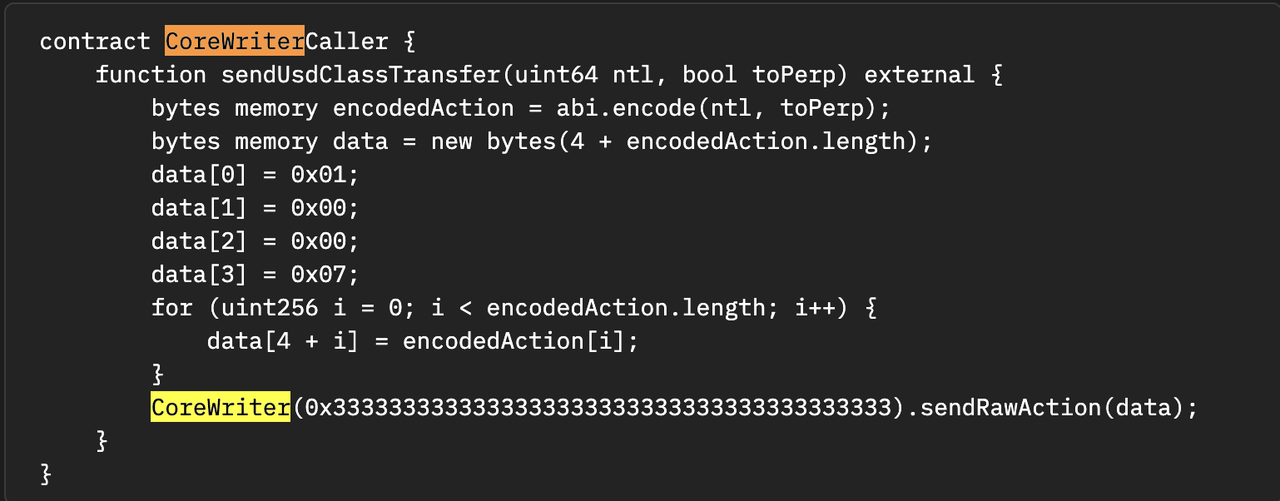
To create these custom markets, deployers use HIP-3 deployer actions (perpDeploy), signed HyperCore transactions that register new perps on-chain. CoreWriter, the HyperEVM system contract that lets smart contracts send orders, transfers and staking actions to HyperCore, does not deploy markets.
Think of these deployer actions like a publishing form: they let you fill in details about your new market, set up tickers (like BTC/USD), connect price feeds, and push it live. Once submitted, the new market trades through the same HyperCore order books and API everyone already uses, and trading platforms such as Hyperdash list HIP-3 markets next to crypto perps. No extra steps for traders. It's just there. This lets the ecosystem grow faster, without waiting for approvals or listings.
Deployment is subject to on-chain economic constraints, including a 500,000 HYPE staking requirement, a Dutch auction for every asset after a DEX's first three, and protocol-defined parameters designed to limit spam and align incentives.
How HyperCore Enables HIP-3 Functionality
All of this works smoothly because of HyperCore, Hyperliquid blockchain's custom-built engine. Most crypto exchanges rely on other blockchains to process trades, but Hyperliquid doesn't. It uses its HyperCore system to keep things fast and fully on-chain.
HyperCore handles every trade, balance update, and real-time market action. It enables low-latency execution and fully on-chain processing without traditional gas bottlenecks.
The Role of HyperEVM in Builder Flexibility
Developers use HyperEVM, which stands for "Hyperliquid Ethereum Virtual Machine," to build on Hyperliquid. This tool lets people write smart contracts using Solidity, the same coding language used on Ethereum. This means Ethereum developers don't have to learn anything new. They can use the same tools, test environments, and code libraries they already know. HyperEVM makes the transition smooth and fast.
How HIP-3 Affects Validator Performance on Hyperliquid
The network needs to handle all of this activity (more markets, more trades, more contracts), and that's where Hyperliquid Validators come in.
Validators are computers that check every transaction and keep the network running. Since HIP-3 launched, they've had to process more data, but performance has remained stable. That's because HIP-3 was designed to split the work evenly, instead of putting pressure on any part of the system. This keeps things fast and secure, even as the exchange grows.
Validator performance has remained stable through early HIP-3 adoption, with ongoing monitoring as market and contract volume continues to grow.
Why HIP-3 Makes Hyperliquid the Everything Exchange
With builder-deployed perps, an easy-to-use system for launching new markets, and real-time blockchain processing, Hyperliquid is evolving into a platform where a broad range of perpetual markets can be created and traded on-chain without centralized listings. There's no need to wait for listings. No special access required. And all of it stays on-chain: from creation to execution. This is what makes HIP-3 Hyperliquid a major step forward. It gives builders control, speed to traders, and stability to the whole system. For a deeper look at deployer stakes, fees and margin rules, read What Is HIP 3 on Hyperliquid?
Protocol status and features reviewed as of November 2026.
FAQs
What is HIP-3 on Hyperliquid?
HIP-3 is an upgrade that lets anyone who meets the staking requirement create their own trading markets directly on the Hyperliquid exchange using on-chain deployer actions.
What does "builder-deployed perps" mean?
External developers, not just the Hyperliquid team, can launch new perpetual markets on the platform.
What is CoreWriter used for?
CoreWriter is a HyperEVM system contract that lets smart contracts send actions such as orders, transfers and staking to HyperCore. HIP-3 markets themselves are registered with HIP-3 deployer actions, not through CoreWriter.
Why is HyperCore important?
HyperCore is the engine that powers all trades and market actions on Hyperliquid, keeping everything fast and on-chain.
Do I need to learn a new coding language to build on Hyperliquid?
No. Developers can use Solidity through HyperEVM, which works like Ethereum smart contracts.