The Complete Guide to Hyperliquid: What Beginners Need to Know Before Trading

June 8, 2026
By Hyperdash
Hyperliquid has rapidly become the dominant decentralized perpetual exchange, processing over $1.5 billion in daily volume and introducing tokenized spot equities to on-chain traders. For beginners, the transition from centralized exchanges (CEXs) to a fully decentralized, order-book-based platform can feel daunting. However, understanding the mechanics of Hyperliquid’s custom L1 blockchain and its unique product offerings is essential for modern traders.
Published
June 8, 2026
Author
Hyperdash
Reading time
4 min read
Category
DeFi & Crypto Fundamentals
This guide breaks down everything you need to know before placing your first trade on Hyperliquid, from connecting your wallet to understanding the platform’s fees and the introduction of tokenized spot equities.
What is Hyperliquid?
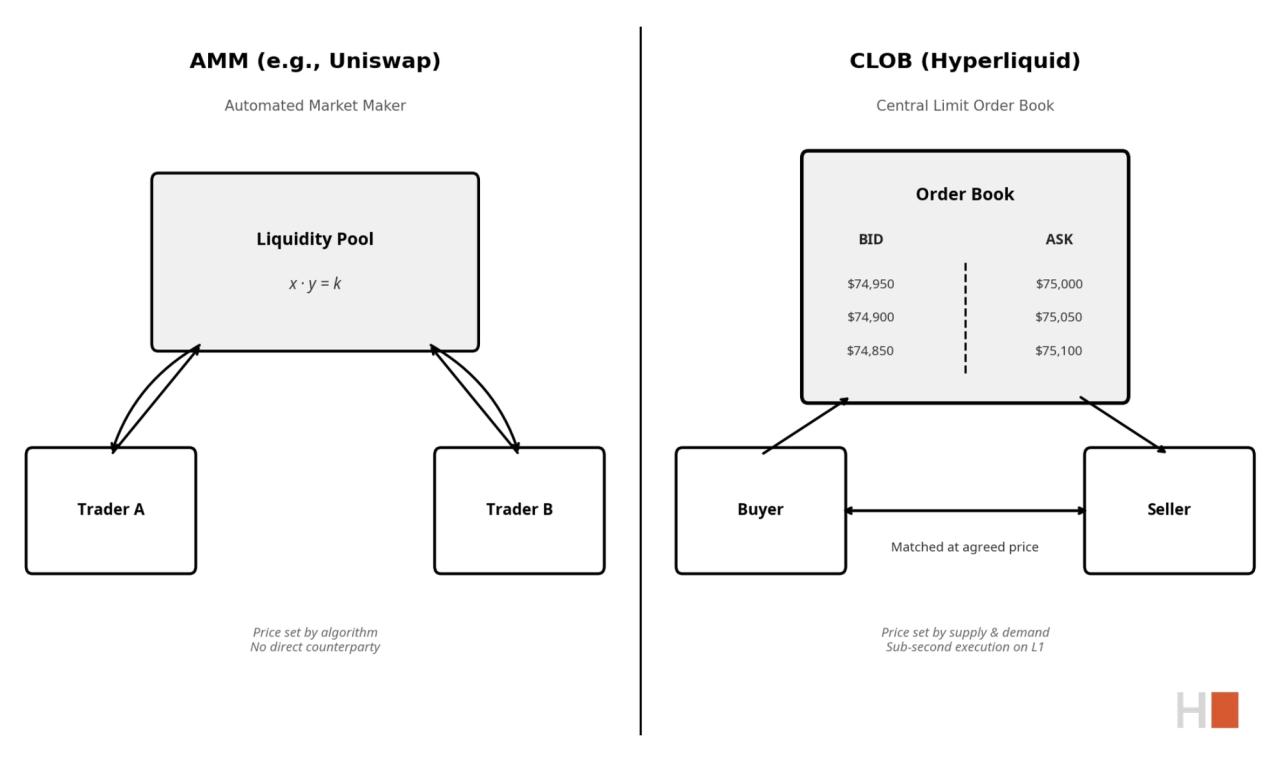
Hyperliquid operates on its own custom Layer-1 blockchain, enabling sub-second order execution with zero gas fees for traders. Unlike automated market maker (AMM) models used by earlier decentralized exchanges, Hyperliquid utilizes a fully on-chain central limit order book (CLOB). This means the trading experience mirrors that of traditional centralized platforms, but with the massive advantage of complete self-custody over your assets.
At its core, Hyperliquid was built to solve the latency and fee issues that plagued earlier decentralized finance (DeFi) trading platforms. By running a specialized L1 optimized solely for trading, the platform can handle up to 20,000 orders per second. This technical architecture allows for deep liquidity across a wide range of assets, including cryptocurrencies, forex, and equities.
How to Get Started on Hyperdash
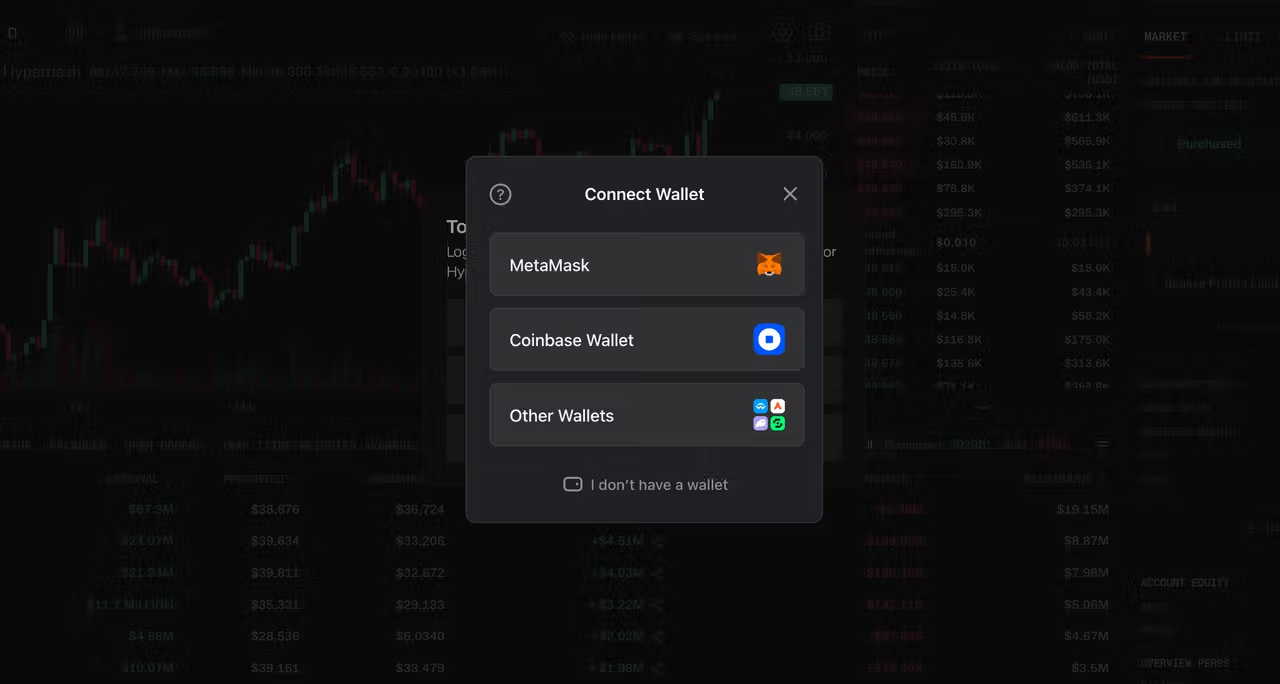
The easiest way to access Hyperliquid is through Hyperdash, a professional trading terminal built directly on top of the Hyperliquid L1. Rather than navigating multiple interfaces to bridge funds, configure a wallet, and then find a trading platform, Hyperdash consolidates the entire experience in one place: sign up, deposit, and start trading without ever leaving the dashboard.
Hyperdash supports three ways to get started, so you can choose the option that suits you best:
- Sign Up with Google or Email: This is the simplest path. Go to hyperdash.com, click “Sign Up”, and use your Google account or email address. Hyperdash handles the wallet creation in the background.
- Connect a Web3 Wallet: If you already use MetaMask, Rabby, or another self-custodial wallet, you can connect it directly. Your wallet acts as both your login credential and your self-custodial vault, meaning Hyperdash never holds your funds at any point.
- First Deposit: Once your account is set up, use Hyperdash’s built-in deposit flow to bridge any supported network directly to the Hyperliquid L1. The interface guides you through each step.
- Enable 1-Click Trading: Activate the 1-Click Trading session key with a single confirmation. From that point forward, every order you place, cancel, or modify executes instantly.
Trading Tokenized Spot Equities
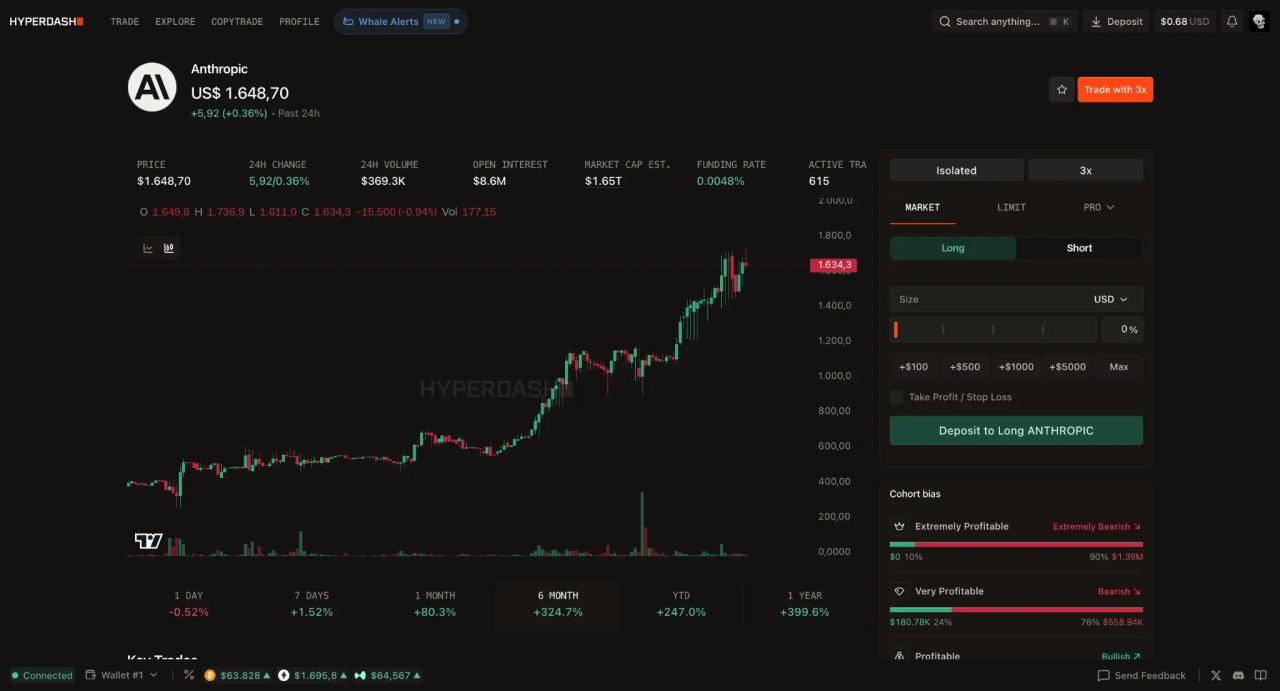
In a major expansion of its product suite, Hyperliquid now supports tokenized spot equities, allowing users to trade traditional stocks on-chain 24/7. This feature bridges the gap between traditional finance (TradFi) and DeFi, offering exposure to major equities without the need for a traditional brokerage account.
For beginners, this means you can hold and trade tokenized representations of popular stocks directly from your crypto wallet. This is particularly advantageous for global traders who face restrictions accessing US equity markets or those who want to trade outside of standard market hours. When combined with Hyperliquid’s perpetual contracts, traders can now hedge their equity portfolios using crypto-native tools.
Understanding Fees and Liquidations
Hyperliquid charges a flat taker fee of 2.5 basis points (0.025%) and offers a 0.2 basis point (0.002%) rebate for makers, making it highly competitive with top centralized exchanges. Understanding this fee structure is crucial for beginners to manage trading costs effectively.
When trading perpetual contracts with leverage, beginners must also understand liquidations. Hyperliquid uses a cross-margin system by default, meaning your entire account balance acts as collateral for all open positions.
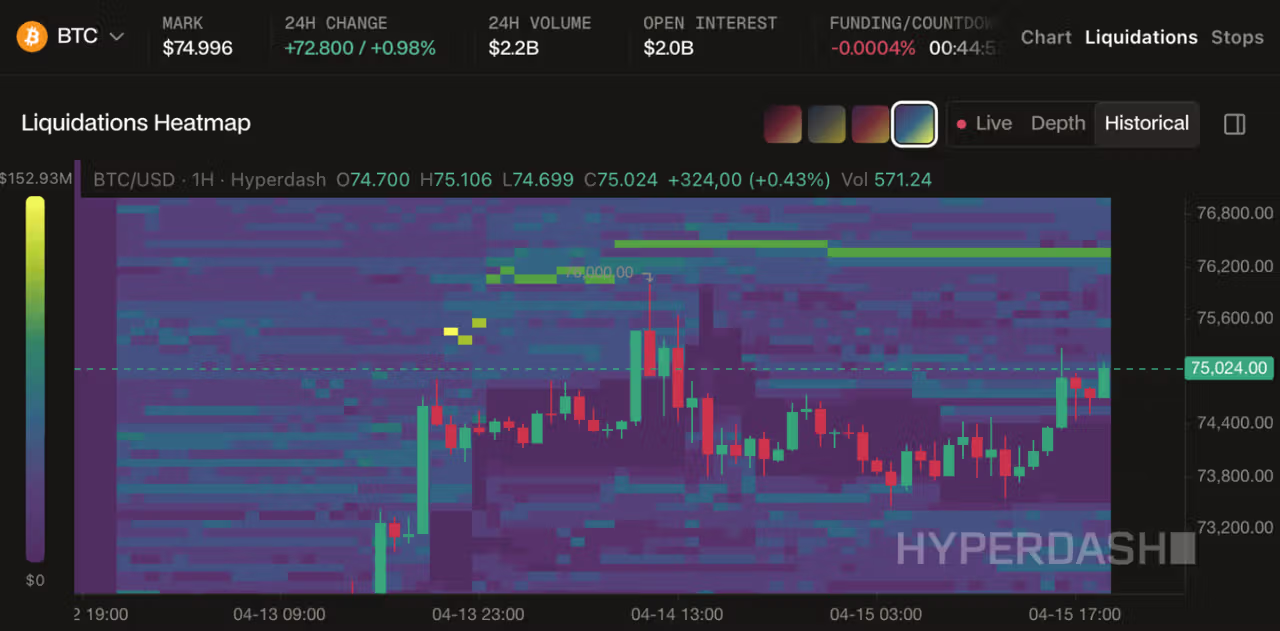
This is where using a professional terminal like Hyperdash becomes essential. Instead of guessing where the market might reverse, Hyperdash provides real-time liquidation heatmaps, allowing you to see exactly where other traders are over-leveraged. It is highly recommended that beginners start with low leverage (e.g., 2x to 5x), utilize strict stop-loss orders, and monitor Hyperdash’s analytics to manage risk effectively.
Frequently Asked Questions (FAQ)
Is Hyperliquid safe for beginners?
Hyperliquid is generally considered safe, utilizing a custom L1 and self-custodial architecture. However, as with all DeFi platforms, users bear the responsibility of securing their own private keys and understanding the risks of smart contract vulnerabilities.
Can I trade stocks on Hyperliquid?
Yes, Hyperliquid supports leveraged equity trading, allowing users to take long or short positions on major company valuations 24/7 directly from their account on Hyperdash.
Do I need to pay gas fees for every trade?
No. Once you have bridged USDC to the Hyperliquid L1 and enabled 1-Click Trading, order placement, cancellation, and execution incur zero gas fees.
Do I need a crypto wallet to get started?
No. Hyperdash supports sign-up via Google or email, making it accessible to traders who are new to crypto and do not yet have a self-custodial wallet.
Ready to start trading?
Open your Hyperdash account and access sub-50ms latency execution, real-time liquidation heatmaps, and advanced analytics built directly on top of Hyperliquid.
Disclaimer: The information provided in this article is for educational purposes only and does not constitute financial advice. Trading perpetual contracts and leveraged equities involves significant risk. Always conduct your own research before deploying capital.