NVIDIA Q1 FY2027 Earnings: Why the Q2 Guide Matters More Than the Beat

May 15, 2026
By Hyperdash
NVIDIA (NVDA) reports its Q1 FY2027 earnings after the close on Wednesday, May 20, 2026. This is the most anticipated liquidity event of the quarter for traders across markets.
Published
May 15, 2026
Author
Hyperdash
Reading time
7 min read
Category
Market Analysis
But if you are positioning around the headline revenue beat, you are trading the wrong number.
Over the last five quarters, NVIDIA has beaten consensus revenue estimates by 3 to 4 percent every single time. The stock has still fallen the following day in four of those five instances. The market stopped paying for a standard beat a long time ago. What it is paying for now is sequential acceleration into Q2.
Here is what the numbers say, why the Q2 guidance is the real catalyst, and how traders are using 24/7 on-chain perpetuals to position around the print without waiting for the opening bell.
What Wall Street Expects for Q1
For the quarter ending April 26, 2026, the Street consensus sits at $78.78 billion in revenue and $1.76 adjusted EPS. Against Q1 FY2026's $44.06 billion, that is +78.8% year-over-year growth. On paper, a remarkable number.
UBS raised its NVIDIA price target ahead of the print and expects a strong report, in line with the broader analyst consensus on the Street. Of the 61 analysts tracked by CNBC covering NVIDIA, the overwhelming majority maintain a buy or outperform rating.
The implied earnings-day move, based on at-the-money straddle pricing, is roughly 5%, mapping to a range of approximately $208 to $230 by the May 22 expiration. The options market is pricing a near coin-flip between fresh all-time highs and a round-trip back to last month's lows.
The Pattern: Five Quarters of Beating and Falling
The table below shows NVIDIA's last five earnings prints, the revenue result, and the next-day stock reaction.
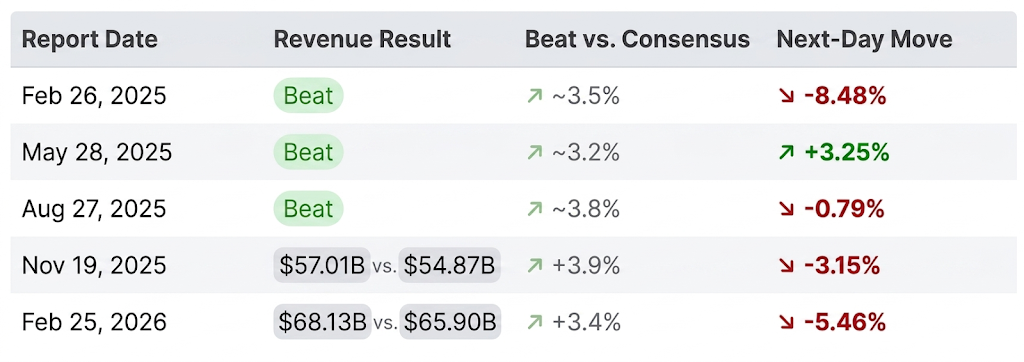
Average absolute next-day move across these five prints: 4.23%. Mean signed move: -2.93%. The beat-and-fall pattern is not an anomaly. It is the base rate.
Why the Q2 Guide Is the Real Catalyst
Current consensus for Q2 FY2027 revenue is $86.08 billion, implying +9.3% sequential growth on top of Q1's record numbers. For context, FY2026's Q1-to-Q2 sequential growth was only +6.1%. The Street is already modeling sequential acceleration. Every dollar of guidance below $86 billion reads as deceleration against that implicit assumption.
The working levels for the May 20 print look like this:
- Q1 revenue above $80B (a 1.5%+ beat) to satisfy the market's expectation of a 3-4% beat cadence.
- Q1 adjusted EPS above $1.85 vs. the $1.76 consensus.
- Q2 revenue guidance midpoint above $89B to break the pattern. A guide at $86B (matching consensus) reads as soft. A guide at $84B likely triggers another 3-5% post-earnings drop.
A Q1 beat alone is not enough. The bull case requires both a strong Q1 print and a Q2 guide that clears the $86.08B consensus by a meaningful margin.
The Hyperscaler Ceiling
NVIDIA's growth is structurally tied to the capital expenditures of the four largest US hyperscalers. Combined, Amazon, Microsoft, Alphabet, and Meta are projected to spend approximately $710 billion on capex in 2026, with roughly 75% ($450 billion) directed toward AI infrastructure.
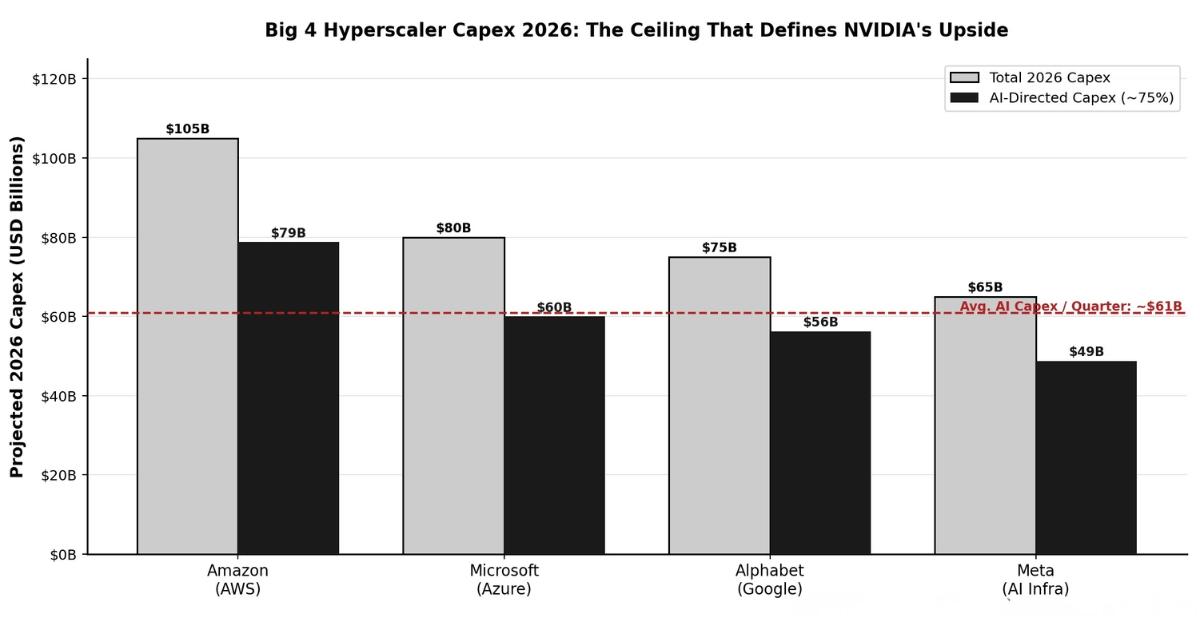
That translates to a quarterly AI capex run rate of about $112 billion across the Big Four. Assuming NVIDIA captures approximately 90% of AI accelerator demand, their theoretical maximum quarterly revenue from these four customers alone is around $101 billion.
With the Q1 consensus at $78.78 billion, NVIDIA is already monetizing roughly 78% of that theoretical ceiling. The room for demand-side surprise is narrower than the year-over-year growth rate suggests. The next expansion of that ceiling is a 2027 story, contingent on hyperscaler budgets growing toward the projected $1 trillion mark.
The China Wildcard: What Jensen Huang on Air Force One Means for the Q2 Guide

There is one massive variable that could immediately raise the ceiling and blow the $86.08 billion Q2 consensus out of the water: China.
On May 13, just a week before earnings, NVIDIA CEO Jensen Huang was added to President Trump's Air Force One delegation for a summit with Chinese President Xi Jinping in Beijing.
The stakes are immense. Beijing has explicitly requested that the U.S. ease export curbs on chipmaking equipment and advanced semiconductors. For NVIDIA, this is about securing regulatory permission to sell its powerful H200 AI chips in its largest blocked market.
This is not a routine diplomatic gesture. It signals that the White House views the H200 export restriction as a live negotiating chip. More importantly, Reuters reported that the U.S. has already cleared H200 chip sales to 10 Chinese firms as Huang looks for a broader breakthrough.
If these export clearances expand meaningfully during the summit, Huang could use the May 20 earnings call to revise the China revenue outlook upward. That is the exact scenario that would generate a massive Q2 guidance beat on top of a Q1 beat, the catalyst required to send the stock materially higher. Conversely, if the summit produces no concrete policy change, the Q2 guide will continue to carry the China ceiling risk that is already priced in.
How to Trade NVDA 24/7 on Hyperliquid
Traditional equity markets close at 4:00 PM ET. NVIDIA reports after the close. The most volatile price action happens in the hours immediately following the release and the subsequent earnings call, while most equity traders are locked out.
On-chain perpetuals change this entirely.
Hyperliquid launched NVDA-PERP in November 2025 through its HIP-3 community-managed framework. The contract hit $12 million in trading volume and $5.8 million in open interest within its first 24 hours. It offers up to 10x leverage and trades continuously, 24 hours a day, 7 days a week.
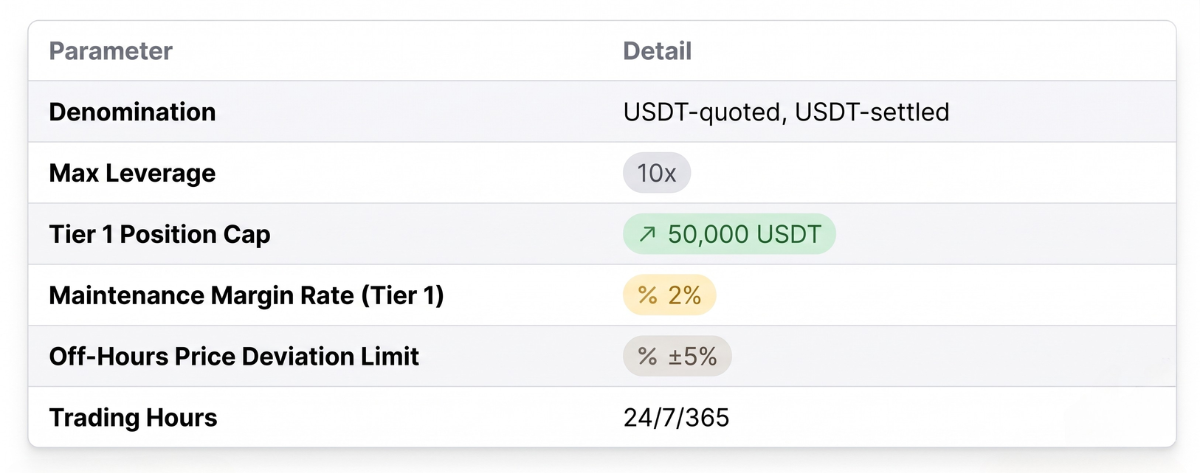
Bybit added NVDA to its TradFi perpetual contracts on May 6-7, 2026, as part of a broader expansion that now covers 20 US stocks, 3 commodities, and 3 global ETFs. The NVDA contract is USDT-denominated, USDT-settled, and follows the same margin and funding rate mechanics as standard crypto perpetuals. Bybit applies a ±5% price deviation limit to individual stocks during off-hours to prevent flash liquidations when traditional markets are closed.
The key contract specs for NVDA on Bybit:
Executing the Trade with Hyperdash
For traders positioning around the May 20 print, Hyperdash is the terminal built for this moment.
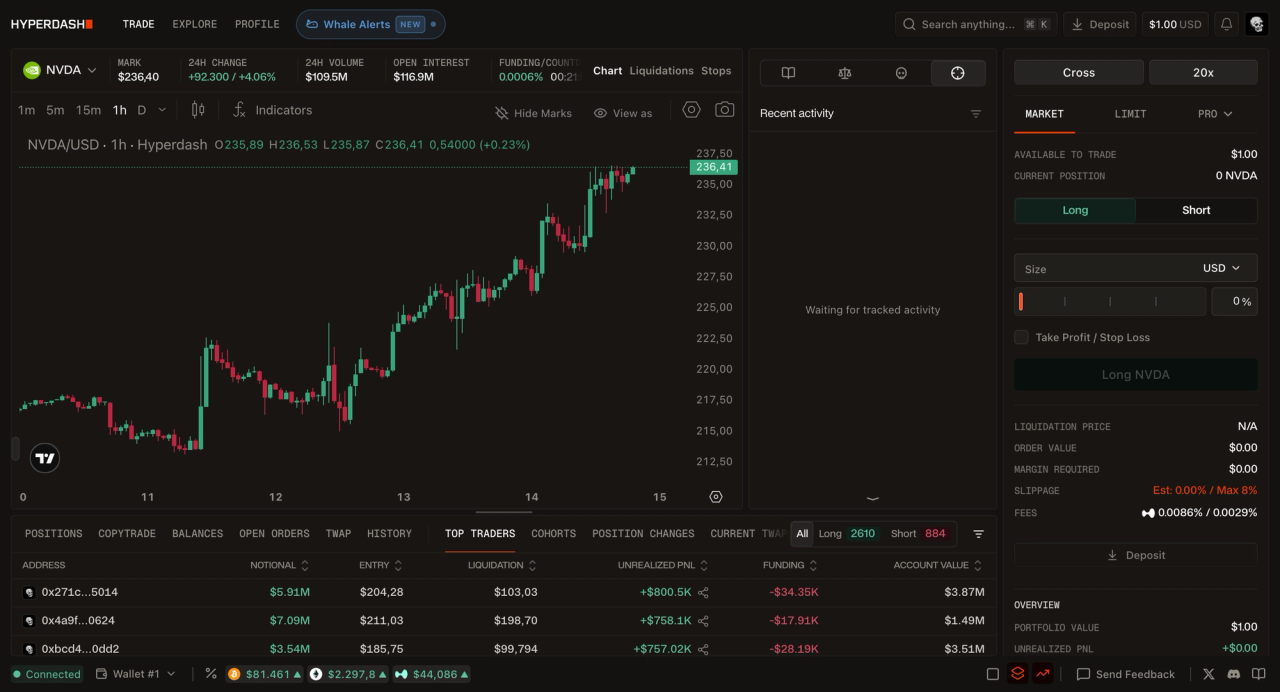
Whether you are going long into a Q2 guidance beat or hedging against a continuation of the beat-and-fall pattern, Hyperdash gives you real-time access to NVDA perpetual order flow on Hyperliquid, liquidation heatmaps to identify cascading liquidation zones, and the speed to execute before and after the earnings release, without waiting for the 9:30 AM opening bell.
The closing bell is no longer the end of the trade. It is the beginning.
Frequently Asked Questions (FAQ)
What is the expected revenue for NVIDIA's Q1 FY2027 earnings?
Wall Street consensus estimates NVIDIA will report $78.78 billion in revenue for Q1 FY2027, which represents substantial year-over-year growth driven by continued data center and AI infrastructure demand.
Why does NVIDIA stock sometimes drop after beating earnings estimates?
Because the market is forward-looking. A beat on the past quarter is often already priced into the stock. If the guidance for the *next* quarter (Q2) does not significantly exceed expectations, institutional investors often take profits, leading to a post-earnings sell-off.
What is the significance of Jensen Huang's trip to China before earnings?
NVIDIA CEO Jensen Huang joined a diplomatic summit in Beijing just days before earnings. The outcome of this summit could determine whether U.S. export restrictions on NVIDIA's advanced H200 chips are eased, which would unlock billions in currently restricted revenue and drastically alter the company's forward guidance.
Can I trade NVIDIA stock outside of regular market hours?
Yes. Through decentralized exchanges like Hyperliquid and platforms like Bybit, you can trade NVDA perpetual contracts 24/7/365. This allows you to react instantly to earnings releases and guidance calls without waiting for the traditional equity markets to open the next morning.
What is the difference between trading NVDA stock and NVDA perpetuals?
Trading the stock gives you direct equity ownership, but you are restricted to traditional market hours. Trading NVDA perpetuals means you are trading a derivative contract that tracks the price of the stock. Perpetuals allow for 24/7 trading, leverage, and the ability to easily short the asset, but they carry liquidation risks and do not provide equity ownership or dividends.
Disclaimer: The information provided in this article is for educational and informational purposes only and should not be construed as financial or investment advice. Trading perpetual contracts, cryptocurrencies, and traditional equities involves significant risk and may not be suitable for all investors. You should carefully consider your investment objectives, level of experience, and risk appetite before trading. Hyperdash does not provide investment advice, and past performance is not indicative of future results.