Perps vs Options: Hedging & Leverage Strategies

June 18, 2026
By Hyperdash
When institutional traders look to protect a portfolio or amplify returns, the debate between perps vs options is shifting. Historically, options were the default instrument for hedging downside risk. But as markets become more interconnected and trade 24/7, the complexity of options pricing, specifically time decay and implied volatility, has driven a massive migration toward perpetual futures.
Published
June 18, 2026
Author
Hyperdash
Reading time
4 min read
Category
Perps
For modern traders, perpetual futures offer a cleaner, more capital-efficient way to execute directional views and static hedges. Whether you are protecting an equity portfolio or leveraging a macro thesis, understanding the mechanics of these instruments is critical.
Here is why perpetuals are replacing options for portfolio hedging, and how to execute these strategies on-chain.
The Mechanics of Delta: Perps vs Options
When comparing perps vs options for hedging, perpetual futures offer linear delta exposure without the impact of implied volatility or time decay (Theta). This makes perpetuals a more capital-efficient instrument for static portfolio hedging.
To understand why, you have to look at how these derivatives are priced. Options pricing is notoriously complex, governed by the "Greeks." Delta measures directional exposure, while Theta measures time decay. If you buy a put option to hedge your portfolio, that option loses value every single day as it approaches expiration, even if the underlying asset's price doesn't move. You are not just betting on direction; you are fighting the clock.
Perpetual futures eliminate this cognitive load. A perpetual contract is a Delta 1 instrument, it moves point-for-point with the underlying asset. There is no expiration date, no strike price to manage, and no premium decay. You are trading pure price action, not volatility.
How to Hedge with Perpetuals Efficiently
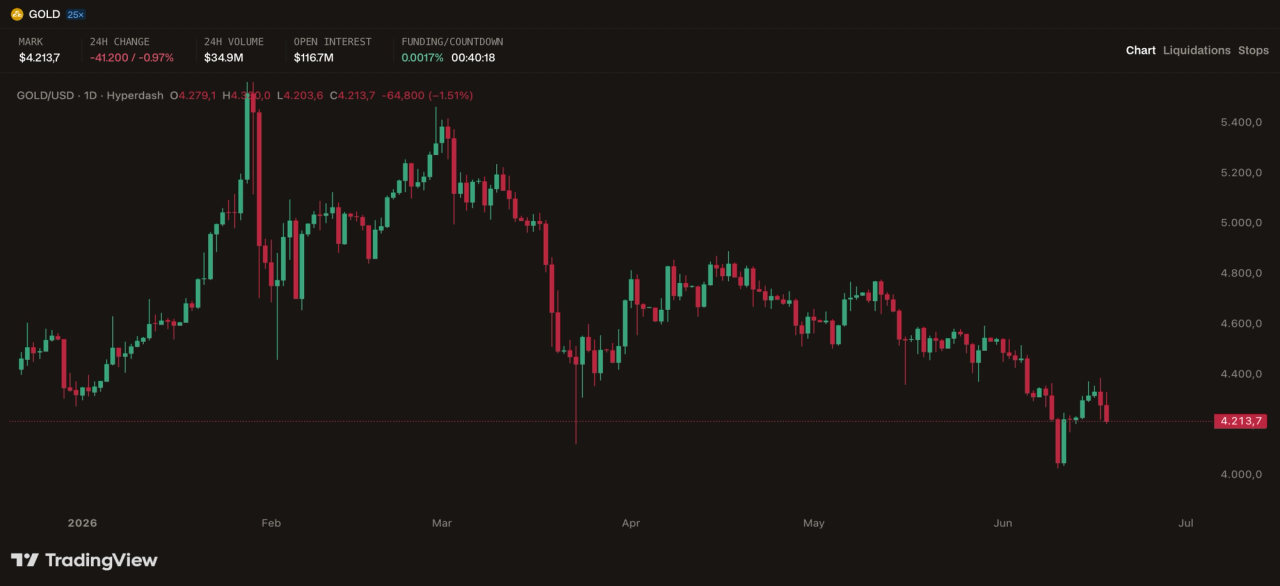
To hedge with perpetuals, traders take a short position equivalent to the notional value of their spot holdings. Unlike options premiums which are sunk costs, perpetual hedges only incur funding rates, which can often pay the hedger during bullish market extremes.
The mechanism that keeps a perpetual contract anchored to the spot price is the funding rate. This is a periodic payment exchanged between longs and shorts. In a bullish market where most traders are long, the funding rate is positive, meaning longs pay shorts.
If you are holding a spot portfolio and want to hedge against a market correction, you can open a short perpetual position. Not only does this lock in the USD value of your portfolio, but in a bull market, you actually get paid the funding rate to maintain that hedge. This creates opportunities for funding rate arbitrage, turning a protective hedge into a yield-generating position.
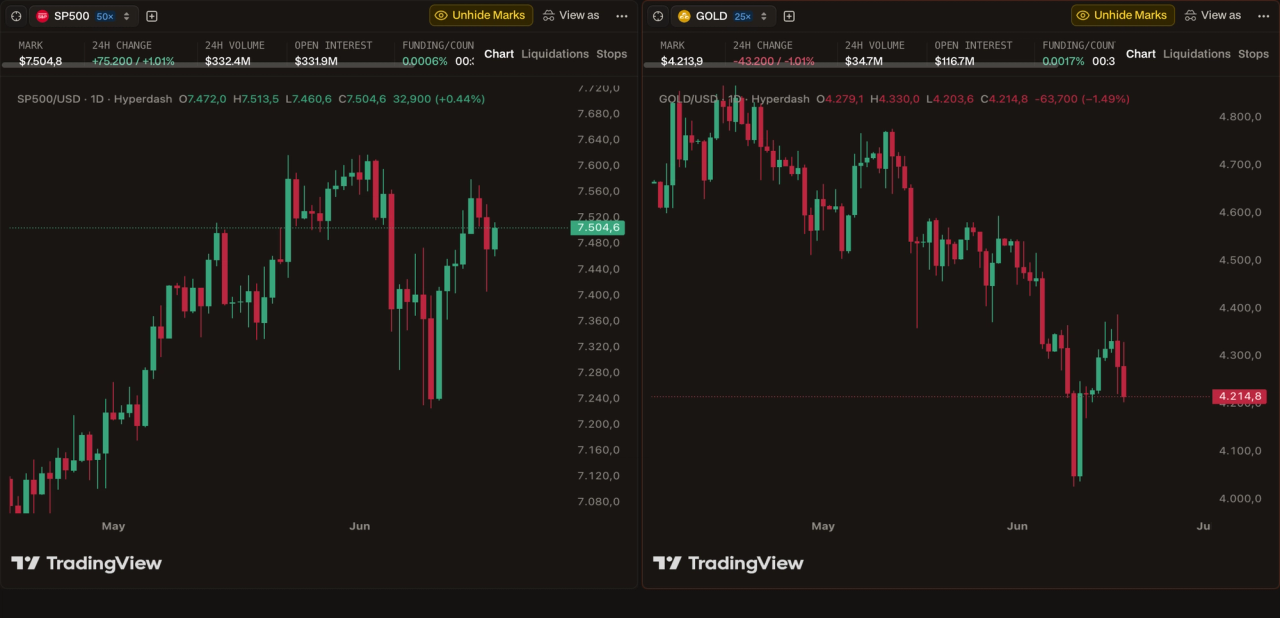
For example, if you hold physical gold or an S&P 500 ETF, you can use an S&P 500 perpetual hedge to protect against weekend gap risks. Because crude oil perpetuals and indices trade 24/7 on platforms like Hyperdash, you are never locked out of your hedge when macro news breaks on a Saturday.
Leverage and Capital Efficiency
Perpetual trading platforms allow for dynamic leverage adjustment, enabling traders to maintain hedges with minimal collateral. This frees up capital for yield generation elsewhere, a distinct advantage over fully-funded options contracts.
When you buy an option, you must pay the premium upfront. If you want to hedge a $100,000 portfolio with options, the premium requires significant capital allocation. With perpetuals, leverage in crypto trading mechanics apply to traditional assets as well.
In practice, positions can be opened with less than $1 in margin, the barrier to entry is effectively zero. This is structurally impossible with options, where the minimum premium alone can run into tens of dollars before you even consider the underlying notional. The remaining capital is free to be deployed elsewhere, which is why derivatives now dominate trading volume globally.
Managing this risk requires discipline. Proper position sizing is essential to avoid liquidation. Advanced traders use tools like the liquidation heatmap to identify where other traders might be forced out of their positions, allowing them to place strategic limit orders.
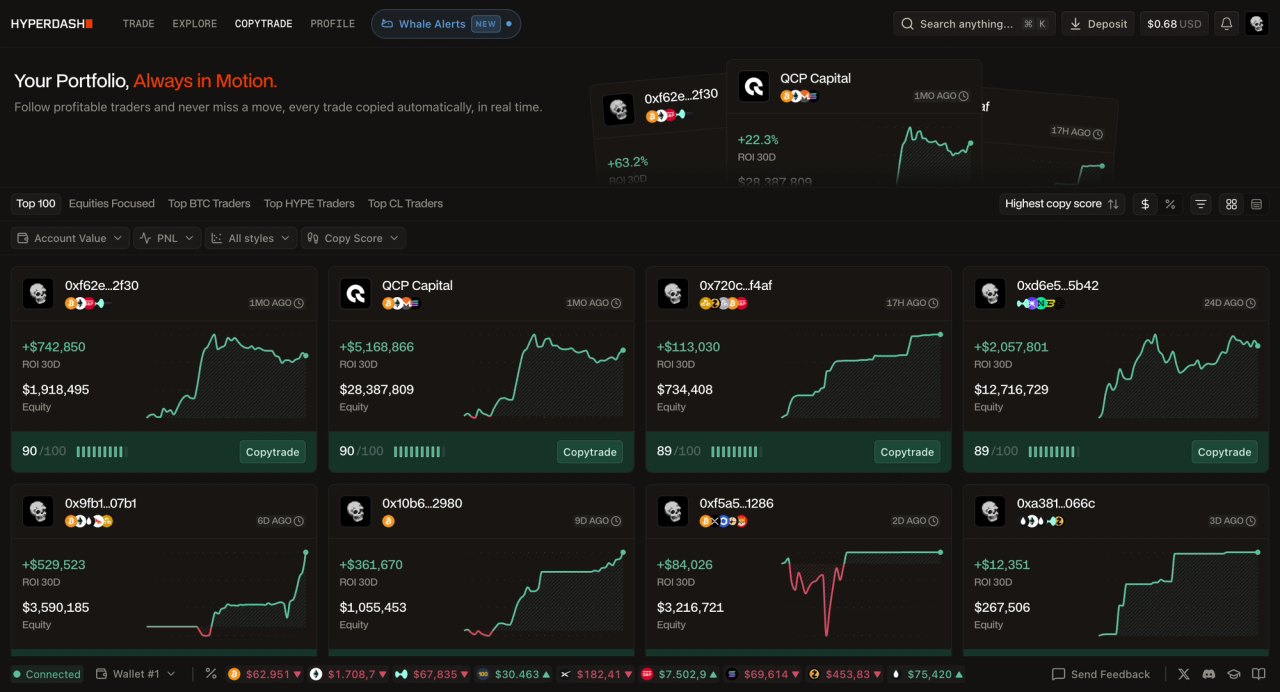
You can monitor your hedge in real-time by customizing your terminal to track funding rates, open interest, and margin health simultaneously. For those who prefer to automate their strategies, copytrading with perpetuals allows you to mirror the hedging strategies of verified profitable traders.
Ultimately, the choice between spot trading vs perpetual futures comes down to utility. If you want to hold an asset forever, buy spot. But if you need to hedge risk, leverage capital, or trade long vs short positions seamlessly, perpetuals are the superior instrument.
Frequently Asked Questions (FAQ)
What is the main difference between perps vs options?
Perpetuals offer linear, non-expiring price exposure, while options give the right to buy/sell at a specific price, introducing complexities like time decay (Theta) and implied volatility.
How do you hedge with perpetuals?
You hedge by opening a short perpetual position equal to the value of your spot assets, effectively locking in the USD value of your portfolio regardless of market movement.
Do perpetual futures expire?
No, perpetual futures do not have an expiration date. Instead, they use a funding rate mechanism to keep the contract price anchored to the underlying spot asset.
Disclaimer: This article is for informational and educational purposes only and does not constitute financial advice, investment advice, or a recommendation to buy or sell any financial instrument. Perpetual futures and other derivatives involve significant risk, including the potential loss of your entire invested capital. Leverage amplifies both gains and losses. Always conduct your own research and consult a qualified financial advisor before making any trading or investment decisions. Past performance is not indicative of future results.